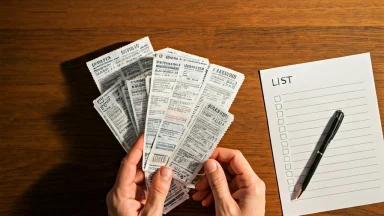
That number on the grocery receipt can feel like a punch to the gut, a weekly reminder that your family’s budget is being drained one shopping cart at a time. For many households, the trip to the market is a source of constant financial stress, an unpredictable expense that seems to grow no matter how hard you try to control it. You walk in with a loose plan and walk out with a cart full of impulse buys, duplicate items, and a lingering sense of defeat. This chaotic cycle isn’t just frustrating; it’s a significant leak in your financial foundation, preventing you from reaching your savings goals.
The problem runs deeper than just overspending at the checkout. A lack of organization directly leads to food waste, as forgotten produce wilts in the crisper and “special offer” items expire in the back of the pantry. This pattern of buying without a clear purpose turns your hard-earned money into trash. True financial control begins by recognizing that the grocery store is a battleground engineered to make you spend more. Mastering market organization fundamentals is your strategic defense, transforming a necessary chore into a powerful tool for building wealth and stability for your family.
This comprehensive guide provides the blueprint for taking back control. We will move beyond simple tips and into a complete system for mastering your grocery spending. You will learn the critical pre-shopping rituals, including strategic meal planning and effective pantry inventory, that set you up for success. We’ll then expose the psychological traps waiting in the aisles and arm you with in-store strategies to navigate them like a pro. Finally, you’ll discover how to leverage coupons and cashback apps to actively lower your bill and implement post-shopping routines that eliminate waste for good. It’s time to stop being a passive consumer and become the master of your market.
The Foundation: Why Market Organization Matters for Your Budget
Is your grocery cart secretly sabotaging your savings? For many families, a disorganized trip to the market is the biggest leak in their monthly budget, filled with impulse buys and forgotten necessities. True market organization fundamentals transform this chaotic chore into a powerful tool for financial control and predictable spending.
The consequences of an unplanned shopping trip extend beyond the checkout line, directly impacting your wallet through food waste. When you shop without a clear plan or list, you are more likely to purchase items you do not need, leading to spoiled produce and expired goods. This common pattern is a major obstacle to waste reduction and a primary reason many budgets fail.
Ultimately, mastering how you shop has a profound budget impact and is essential for long-term financial health. By taking control of your grocery habits, you are directly implementing a key principle of successful household management, similar to what you would find in Family Budgeting 101. This proactive approach is the difference between simply spending and strategically investing in your family’s well-being while saving money every week.
Pre-Shopping Prep: Building Your Smart List
Walking into a grocery store without a plan is financial self-sabotage. That random list of items scribbled on a napkin isn’t a strategy; it’s a surrender to impulse buys and budget blowouts. A truly effective shopping list is the final step in a pre-game ritual that dictates whether you win or lose at the checkout counter, and it’s the core of market organization.
Forget everything you think you know about list-making. We’re not just writing down “milk” and “bread.” This is about building a battle plan for your wallet, a document that ensures every dollar spent is intentional and every item purchased will be used, not forgotten. This simple shift in mindset separates the savvy savers from the chronic overspenders.
Meal Planning for Maximum Efficiency
Do you decide what’s for dinner at five o’clock? That’s not planning; it’s panic, and panic is expensive, often leading to last-minute takeout or overpriced convenience foods. Effective meal planning is the foundation of market organization, dictating exactly what you need and preventing wasteful “just-in-case” purchases that rot in your fridge. It transforms your grocery run from a chaotic hunt into a targeted mission.
Start by planning your family’s meals for the week, focusing on recipes that share key ingredients to minimize waste. If chicken is on sale, plan for roasted chicken one night and chicken tacos another. This is also your chance to align your shopping with weekly flyers; check out our Ultimate Guide to Digital Coupons to see how planning ahead can unlock massive savings before you even leave the house. A well-laid plan is your first line of defense against marketing tricks designed to make you spend more.
Taking Stock: What You Already Have
Your pantry, fridge, and freezer are not black holes; they are bank vaults of ingredients you’ve already paid for. Before you even think about writing a list, you must conduct a thorough pantry inventory. How can you possibly know what to buy if you don’t know what you already own? This simple act is the single biggest defense against buying the third jar of mustard when two are already hiding in your fridge door.
Don’t just glance; get in there and look behind the cereal boxes and under the frozen peas. Create a running list of what you have, especially staples like pasta, rice, canned goods, and spices. Keeping this area organized is crucial for quick checks, and you can find powerful techniques in our guide to Smart Pantry Organization Tips. By shopping from your own home first, you slash your grocery bill and radically reduce food waste, directly boosting your family’s bottom line.
| Phase | Key Action | Primary Benefit |
|---|---|---|
| Pre-Shopping Prep | Plan meals and inventory your pantry before creating a list. | Eliminates buying unneeded items and reduces food waste. |
| In-Store Strategy | Compare unit prices, ignore eye-level products, and stick strictly to your list. | Avoids marketing traps and prevents costly impulse purchases. |
| Leveraging Deals | Stack digital/print coupons with cashback app offers. | Actively lowers your final bill on items you already planned to buy. |
| Post-Shopping Routine | Organize groceries immediately using FIFO (First-In, First-Out) and properly store items. | Maximizes food lifespan, prevents spoilage, and stops money from being thrown away. |
Navigating the Aisles: Smart Shopping Strategies
Stop thinking of the grocery store as a friendly neighborhood market. It’s a carefully engineered environment designed to separate you from your money. Every colorful display, every “special” offer, and even the floor plan is a psychological tool to make you spend more. A successful trip requires an aggressive in-store strategy, turning you from a passive consumer into a tactical shopper who leaves with only what they came for.
Winning in the aisles isn’t about luck; it’s about discipline. This means mastering the art of ruthless price comparison, decoding the hidden language of value on price tags, and building an unbreakable defense against impulse buys. Forget wandering aimlessly; you need a plan of attack from the moment you grab a cart.
The Art of Price Comparison
Are you blindly grabbing the first product you see? Stores count on this lazy habit, placing their most profitable items directly at eye level. True price comparison demands that you physically look up and down the shelves. The best deals are often hidden on the top or bottom shelves, away from the average shopper’s direct line of sight.
You must also challenge the allure of brand names. Are you really paying for superior quality, or just for a multi-million dollar advertising budget? In many cases, the store’s own brand offers an identical product manufactured in the same facility, but for a significantly lower price. Make it a habit to compare the name brand directly against its generic counterpart—the savings will shock you.
Don’t be afraid to use technology as your secret weapon. If a deal seems too good to be true, a quick search on your phone can verify competitor pricing. This is also the perfect moment to check for last-minute savings using what you learned from our Ultimate Guide to Digital Coupons, ensuring you never miss a chance to stack discounts.
Decoding Unit Pricing for True Value
That giant “SALE” sign is often a complete deception. The true measure of a deal isn’t the bold sticker price; it’s the unit pricing printed in tiny font on the shelf tag. This number, which breaks down the cost per ounce, per pound, or per item, is the secret code to identifying genuine value. Ignoring it is like willingly letting the store trick you.
For example, a large “family size” box of cereal may seem like the obvious choice, but its price per ounce could be higher than two smaller boxes that are on a better promotion. The larger package creates the illusion of value, but the math tells the real story. You must train your eyes to find and compare the unit price on every item you consider, as this is the only way to know if you’re actually saving money.
Strategies to Avoid Impulse Purchases
Let’s be honest: your willpower is no match for a team of marketing experts who design stores to trigger emotional spending. The tantalizing smell from the bakery, the candy-lined checkout lanes, and the “limited time only” end-cap displays are all traps designed to fuel impulse buying. Acknowledging that you are being actively manipulated is the first step toward building a defense.
You cannot rely on simply “trying harder” to resist temptation. You need a rigid system that removes emotion from the equation entirely. Having a non-negotiable rule for handling unplanned purchases and treating your shopping list as an unbreakable contract are the only ways to consistently protect your budget from these psychological tactics.
The ’30-Second Rule’ for Non-Essentials
Your brain’s immediate desire for something is an unreliable, expensive advisor. To fight it, implement the ’30-Second Rule.’ When you see an item that is not on your list, you are forbidden from putting it in your cart until you have stopped for a full 30 seconds and asked yourself a series of hard questions. Do I absolutely need this today? What will I use it for? Can my budget handle this unplanned expense?
This mandatory pause shatters the emotional high of the impulse and forces your logical brain to take over. More often than not, this brief moment of reflection will reveal the item as a want, not a need, and you’ll find the strength to walk away. This powerful habit is a core principle of sound financial management, reinforcing the discipline required for successful Family Budgeting 101.
Sticking Strictly to Your Shopping List
Your shopping list is not a gentle suggestion; it is your battle plan for the grocery store. You created it in the calm of your own home, based on a rational assessment of your pantry and your family’s actual needs. To deviate from it for anything other than a necessary substitution is to admit defeat and surrender your budget to the store’s tactics.
If an item is not on your list, it does not go into your cart. This rule must be absolute. There is no “just this one time” or “it’s only a few dollars.” This strict adherence is the single most effective strategy for destroying impulse spending and ensuring your market organization fundamentals translate into real-world savings every single week.
Leveraging Deals: Coupons, Cashback, and Loyalty Programs
Are you still paying the full sticker price at the grocery store? If so, you are willingly handing over your hard-earned money for no reason. A disciplined shopping list is only half the battle; the other half is actively reducing the final bill before you even reach the checkout. Mastering market organization fundamentals means transforming from a passive consumer into a strategic saver who makes deals work for them.
Forget the outdated image of someone spending hours clipping paper squares. The modern savings game is a sophisticated ecosystem of digital tools and store incentives designed to reward the organized shopper. Ignoring coupons, cashback, and loyalty programs is a critical financial error that costs your family hundreds, if not thousands, of dollars over time. It’s time to stop leaving that money on the table.
Mastering the Coupon Game (Print & Digital)
Coupons are not just for random discounts; they are a direct subsidy for your shopping trip. The key is to use them on items you already planned to buy, turning a regular purchase into an immediate win. This requires a small amount of organization, such as having a designated folder for print coupons or utilizing a store’s app where you can digitally “clip” offers before you shop. This aligns your pre-planned list with available discounts.
Digital coupons have revolutionized this space, making it easier than ever to save. Most major grocery chains have their own apps where you can load offers directly to your loyalty card. For a deeper dive into this specific strategy, our Ultimate Guide to Digital Coupons provides a complete walkthrough. The goal is to match your needs to the deals, not let the deals dictate your needs.
Unlocking Savings with Cashback Apps
Imagine getting paid a small percentage back on every grocery run you make. That’s the simple, powerful premise behind cashback apps. These services reward you for your purchases by depositing real money into an account, which you can later transfer. Most operate in one of two ways: you either link your debit or credit card and activate offers before you shop, or you simply scan your receipt after the trip to claim your rewards.
The beauty of this system is that it works on top of any other sales or coupons you might use. It’s an extra layer of savings that requires minimal effort once you’re set up. For those looking to get the most out of this, exploring different platforms is key, a topic we cover extensively in our guide on Maximizing Cashback Rewards. You are essentially earning a rebate for items you were buying anyway.
Maximizing Loyalty Program Benefits
Store loyalty programs are a contract: you give them your repeat business, and they give you special pricing and rewards. However, many shoppers fail to extract the maximum value from this arrangement. Simply signing up is not enough; you must understand how the program is structured to truly benefit from it. These programs track your purchases to offer you personalized deals, so make sure those deals are truly serving your budget.
Understanding Program Tiers and Rewards
Many loyalty systems are tiered. The more you spend, the more you “level up” to unlock better rewards, like higher percentage discounts or exclusive access to sales events. The store’s goal is to encourage more spending, but your goal is to reach these tiers by purchasing only what you need, ideally during bonus point promotions. Pay close attention to how points are earned and what they can be redeemed for—often, redeeming for direct grocery discounts offers more value than merchandise.
Stacking Deals for Ultimate Savings
This is where an organized shopper becomes a savings champion. “Stacking” is the art of combining multiple discounts on a single item. It’s the ultimate offensive move in your savings strategy and a core pillar of a strong family budget, something we discuss in Family Budgeting 101. This transforms a small discount into a massive price reduction.
Here’s how a perfect stack works. You find a box of cereal for $5. You have a $1 manufacturer’s coupon, the store’s app has a $0.75 digital coupon, and a cashback app is offering $1 back on that specific item. By stacking these, you’ve already reduced the price to $2.25. If your loyalty program gives you an additional 5% off, you save even more. This methodical approach is how you take full control of your grocery spending.
Post-Shopping: Storage, Inventory, and Waste Reduction
You think the savings game ends at the checkout? Think again. Every item that spoils in your fridge or gets lost in your pantry is money thrown directly into the trash. Mastering market organization fundamentals extends into your kitchen, turning your post-shopping routine into a powerful tool for financial control and significant waste reduction.
The average family discards hundreds of dollars worth of food each year simply due to poor management. This isn’t just about being forgetful; it’s a systemic failure in how we handle the resources we purchase. It’s time to stop treating your kitchen like a temporary holding cell for food on its way to the garbage can and start managing it like the asset it is.
Proper Storage for Freshness and Longevity
Most food comes with an invisible expiration clock that you can either speed up or slow down. Proper food storage isn’t an obscure science; it’s a set of simple rules that most people ignore. Storing your groceries correctly is the first line of defense against waste, directly protecting the money you worked hard to save at the store.
Stop making common mistakes that accelerate spoilage. For example, many fruits and vegetables release ethylene gas, which causes other produce to ripen and rot faster. Understanding these basic interactions can dramatically extend the life of your fresh foods.
- Keep potatoes, onions, and garlic in a cool, dark, and dry place, but never store potatoes and onions together as they will cause each other to spoil.
- Treat fresh herbs like a bouquet of flowers—trim the stems and place them in a jar with water, or wrap them in a damp paper towel.
- Store leafy greens with a dry paper towel in a sealed bag or container to absorb excess moisture and prevent wilting.
- Keep tomatoes and bananas on the counter, not in the refrigerator, to preserve their texture and flavor.
Smart Pantry and Fridge Organization
Is your pantry a chaotic mess where products go to disappear? An unorganized kitchen guarantees you will buy items you already own and let others expire. Implementing a system for pantry organization gives you a clear inventory, which is essential for effective meal prep and budget-conscious shopping lists.
Adopt the “First-In, First-Out” (FIFO) principle used by grocery stores. When you buy new items, move the older ones to the front so you use them first. This simple habit single-handedly slashes waste from expired goods. For more advanced techniques, explore our complete guide to Smart Pantry Organization Tips.
Create dedicated zones in your refrigerator and pantry for different categories like snacks, drinks, produce, and meal ingredients. This visual clarity makes it easy to see what you have at a glance, preventing overbuying and making meal planning faster. Knowing your inventory is a cornerstone of effective financial planning and a key part of your overall Family Budgeting 101 strategy.
Review & Refine: Making Market Organization a Habit
Is your budget set in stone? It shouldn’t be. The true mastery of market organization fundamentals doesn’t come from creating a perfect plan once, but from treating it as a living document. True financial control is about continuous improvement, turning a good system into a great one through regular check-ups and honest assessment.
Set aside time each month to review your spending and shopping habits. Did you stick to your list, or did impulse buys creep in? Analyze your receipts to see if you are taking full advantage of all savings opportunities, which is key to Maximizing Cashback Rewards and using deals from the Ultimate Guide to Digital Coupons. This simple review is your most powerful tool for identifying what works and what needs adjusting.
By making this review a consistent part of your routine, you transform market organization from a chore into a powerful habit. This ongoing process of refinement is the secret to long-term savings and a core principle of Family Budgeting 101. Small adjustments over time lead to significant financial gains, ensuring your family’s budget remains resilient and effective.
From Chore to Choice: Taking Control of Your Grocery Budget
Mastering market organization fundamentals is more than just a method for saving a few dollars; it’s a fundamental shift in your relationship with money, food, and planning. By transforming a chaotic weekly chore into a strategic, disciplined process, you reclaim control over a major part of your household budget. The journey from aimless wandering to tactical execution—from pre-shopping prep and in-store discipline to post-shopping waste reduction—empowers you to make conscious choices that directly benefit your family’s financial well-being. Embrace these principles not as a rigid set of rules, but as a sustainable skill that will pay dividends for years to come, turning every trip to the market into a confident step toward your financial goals.
Frequently Asked Questions
How can I stop impulse buying at the grocery store?
The most effective way to stop impulse buying is to use a two-pronged defense. First, create a detailed shopping list based on a meal plan and stick to it absolutely. Second, implement a rule like the ’30-Second Rule’ for any unplanned item, forcing you to pause and logically question if you truly need it before it goes in the cart.
What’s the best way to organize my shopping list?
For maximum efficiency, organize your shopping list by the store’s layout to prevent backtracking and temptation. Group items into categories like produce, dairy, frozen foods, and dry goods. This turns your shopping trip into a targeted mission rather than a wandering exploration, saving both time and money.
Are digital coupons better than printed ones for saving?
Neither is definitively better; a smart shopper uses both. Digital coupons offer incredible convenience and can be loaded directly to a loyalty card, making them easy to stack. However, printed coupons from newspapers or mailers can sometimes offer unique or higher-value discounts, so incorporating both into your strategy yields the maximum savings.
How often should I review my market organization strategy?
You should conduct a light review of your strategy weekly as you plan your meals and shopping list. A more thorough review is beneficial on a monthly or quarterly basis. This allows you to assess what’s working, adjust for changing food prices or family needs, and ensure your habits remain aligned with your overall budget goals.
What are the easiest ways to reduce food waste after shopping?
The easiest methods are implementing proper storage and visibility. When unpacking groceries, move older items to the front of the fridge and pantry and place new items behind them (FIFO method). Also, use clear containers for leftovers so you can easily see what you have, and designate one night a week as a ‘use-it-up’ meal to clear out odds and ends.