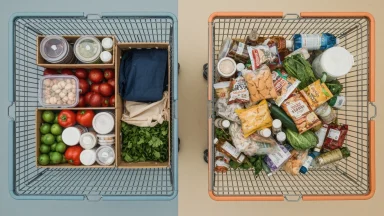
That sinking feeling of looking at a grocery receipt and wondering how it got so high is a universal experience. For many families, the weekly shop feels like a financial black hole, a necessary expense that’s frustratingly difficult to control. We walk in with good intentions but walk out with a cart full of impulse buys, items we already had at home, and a budget that’s been stretched to its breaking point. This cycle isn’t just about a lack of willpower; it’s the result of shopping without a strategy in an environment designed to encourage spending.
But what if you could transform this weekly chore into a powerful financial tool? Mastering market organization is about shifting your mindset from a reactive consumer to a proactive household CEO. It involves more than just a hastily written list; it’s a holistic system that encompasses meal planning, pantry inventory, smart couponing, and even the route you take through the store. This approach directly combats the two biggest budget-killers: impulse purchases and food waste, which studies suggest can drain hundreds, if not thousands, of dollars from a family’s budget each year.
This guide provides a complete blueprint for taking back control. We will explore how to craft the ultimate shopping list that guarantees you only buy what you need. You’ll learn the art of combining digital and printed coupons to achieve maximum savings, a technique savvy shoppers use to cut their bills significantly. we’ll reveal the in-store tactics to navigate the supermarket’s psychological tricks and post-shopping routines to ensure not a single dollar spent goes to waste. Prepare to turn your grocery run into a rewarding, money-saving mission.
Why a Strategic Approach to Market Organization is required
Walking into a grocery store without a plan is like trying to assemble furniture without instructions—chaotic, frustrating, and almost certain to end with extra parts you don’t need. This unplanned approach often leads to impulse buys, forgotten necessities, and a bloated receipt. A strategic market organization system transforms this weekly chore into a powerful savings tool.
The data suggests—quite convincingly—that this isn’t just a feeling. According to analysis from consumer expenditure reports, families that consistently plan meals and shop with a detailed list can cut their grocery bills by as much as 17%. This simple discipline is a key component of holistic household economics, where small, smart habits create substantial financial breathing room over time.
It’s about more than just saving money. The underrated factor here is the massive reduction in food waste and decision fatigue. How often have you thrown out wilted vegetables you bought with good intentions but no actual plan? A structured approach—which is much easier than most people think—eliminates that guesswork and waste.
This is about intentional spending, not deprivation.
Ultimately, achieving this control involves more than just scribbling a list on a napkin. It requires a simple blueprint for your grocery organization that accounts for what you already own, what you need, and how to find it efficiently in the store. By shifting from a reactive shopper to a proactive planner, you take direct command of a major, flexible part of your family’s budget.
Blueprint for Success: Crafting Your Ultimate Shopping List
A well-crafted shopping list is your family’s first line of defense against budget overruns and food waste. Before you even think about what to buy, the most critical step is a thorough inventory of what you already own. This simple action directly combats waste. In fact, research from the American Journal of Agricultural Economics suggests the average household discards nearly 32% of its food, much of it due to forgotten items or duplicate purchases.
Think of it as a pre-flight check for your shopping trip. It ensures you only buy what is necessary.
From Pantry Check to Meal Plan: The First Steps
Your journey to shopping list planning begins not in an app, but in your kitchen. Systematically check your pantry, refrigerator, and freezer, making a quick note of items you have in abundance and those nearing empty. With this inventory in hand, you can begin meal planning for the week, building recipes around ingredients you need to use up first. This is the secret to unlocking genuine family savings potential.
Once your meals are planned, your shopping list almost writes itself. It becomes a simple gap-filling exercise. Do you need chicken thighs for Friday’s dinner or more oatmeal for breakfast? The underrated factor here is how this proactive approach shifts your mindset from “what do I want?” to “what do I need?” — a core part of any blueprint for fluid grocery organization.
Categorizing Your List for Efficiency
A random list of items is a recipe for disaster. It leads to backtracking through aisles, increasing both your time in the store and your exposure to tempting impulse buys. Instead, organize your list to mirror the grocery store’s layout. Grouping items by category—produce, dairy, meats, dry goods, frozen foods—streamlines the entire process. It turns a chaotic scavenger hunt into an efficient, targeted mission.
Building the perfect list is a habit that pays dividends. To make it stick, follow a simple checklist:
- Inventory First: Check your pantry, fridge, and freezer before planning.
- Meal Plan Centered: Base your weekly meals on items you already have.
- List by Category: Group items by store section (e.g., Produce, Dairy, Canned Goods).
- Specify Quantities: Write “1 gallon of milk” instead of just “milk” to prevent over- or under-buying.
- Note Coupon Items: Add a star next to items you have a coupon for, including valuable digital coupons you’ve clipped online.
This structured list does more than just guide your purchases; it acts as a financial guardrail throughout your shopping trip, keeping your cart—and your budget—on track.
Shoppers who follow a rigid, non-standard path are about 40% less likely to make unplanned purchases.
— Dr. Paul Harrison, Consumer Behavior Specialist
| Strategy | Key Action | Expected Benefit |
|---|---|---|
| List Planning | Conduct a pantry inventory before creating a meal plan and categorized list. | Eliminates duplicate purchases and reduces food waste. |
| Strategic Couponing | Combine store sales, manufacturer coupons (print & digital), and cashback apps. | Dramatically lowers the cost of items, often making name brands cheaper than generic. |
| In-Store Tactics | Shop from a categorized list, follow a non-standard route, and check unit prices. | Minimizes impulse buys and ensures you get the best value per ounce/item. |
| Post-Shopping System | Organize groceries using the FIFO (First-In, First-Out) method and proper storage. | Reduces spoilage and ensures food is used before it expires, protecting your investment. |
Leveraging Digital and Printed Coupons for Maximum Value
Once you have a rock-solid shopping list, the next level of savings comes from an effective coupon strategy. This isn’t just about snipping a few coupons from the Sunday paper anymore. True value comes from skillfully blending the old-school charm of printed offers with the convenience of modern digital tools. It’s a method that requires a bit more organization but delivers a significant impact on your grocery bill.
The key is understanding that digital and printed coupons often operate in different ecosystems, creating opportunities that casual shoppers miss. By learning how to navigate both, you can unlock deeper discounts. This is the core of combining traditional coupons with digital savings for maximum effect.
Navigating the Digital Coupon Landscape
Digital coupons have exploded in popularity, and for good reason. They are accessible directly from your phone through store-specific apps, third-party platforms, and cashback services. According to data from Inmar Intelligence, mobile coupon redemption has consistently grown, showing a major shift in how families save. These apps often learn your shopping habits and present you with offers for products you already buy regularly, adding a layer of personalization that paper coupons can’t match.
This convenience comes with a catch. Many apps require you to “clip” or activate offers before you shop, a step that’s easy to forget in a rush. What many people miss is that using these apps is an exchange; you get discounts, and the app provider gets valuable data on your purchasing behavior. It’s about finding a balance you’re comfortable with.
Best Apps for Grocery Savings
Choosing the right app can feel like picking a checkout line—you want the one that moves fastest and saves you the most. Some of the most popular platforms work in slightly different ways, each with its own set of advantages.
- Store Apps (e.g., Kroger, Safeway, Target Circle): These are your first stop. They offer digital manufacturer and store coupons you can load directly to your loyalty card. The best part? The savings are applied automatically when you scan your card or enter your phone number at checkout.
- Cashback Apps (e.g., Ibotta, Fetch Rewards): Instead of an instant discount, these apps give you money back after your purchase. Ibotta requires you to select specific offers and scan your receipt (and sometimes product barcodes), but it often has high-value rebates, sometimes offering 100% cashback on promotional items. Fetch is simpler—just scan any grocery receipt—but the rewards accumulate more slowly.
- Printable Coupon Websites (e.g., Coupons.com): These sites act as a bridge, allowing you to browse offers online and print them at home. It combines digital convenience with a physical coupon you can hand to the cashier.
Maximizing Savings with Printed Coupons
Don’t let the digital wave fool you. Printed coupons are far from obsolete and remain a powerful tool in any strategic shopper’s arsenal. In fact, some of the highest-value coupons for household goods and personal care items are still found exclusively in print. Think of it this way: neglecting printed coupons is like leaving a five-dollar bill on the sidewalk just because you prefer using a debit card.
A significant advantage is their straightforward nature. There’s no app to crash or battery to die (—yes, that still happens!). The underrated factor here is their universal acceptance, as every store that takes coupons knows exactly how to process them, which can simplify your checkout experience. This is a core concept in understanding home economics through printed coupons.
Where to Find and How to Organize
Finding these paper gems is the first part of the hunt. The Sunday newspaper is the classic source, typically containing inserts like Save and SmartSource. But don’t stop there. Keep an eye out for coupon dispensers in store aisles (often called “blinkies”), direct mail packets, and even on product packaging itself.
Organization is what separates a casual couponer from a savings champion. Many people swear by the “binder method,” using baseball card sleeves to organize coupons by category. Others prefer a simpler “accordion file method,” with sections for different store departments like dairy, produce, and pantry. The right system is the one you’ll actually use consistently.
Strategic Stacking: Combining Offers
This is where you multiply your savings. “Stacking” is the practice of using multiple discounts on a single item. The most common stack involves using one manufacturer coupon (whether printed or digital) with one store coupon for the same product. But why stop there?
Imagine a box of name-brand cereal is on sale for $3.29, down from its regular price of $4.99. You have a $0.75 printed manufacturer’s coupon and the store’s app has a digital coupon for $0.50 off. By using both, you’ve already brought the price down to $2.04. After your purchase, you scan the receipt into a cashback app like Ibotta, which happens to have a $0.60 rebate for that exact cereal. Your final price? A mere $1.44. That’s a total savings of over 70% from the original price.
Achieving this level of savings requires a bit of planning, almost like a puzzle. You need to read the fine print on each offer and be aware of your store’s specific coupon policy, as rules on stacking can vary. Mastering this technique transforms your weekly shopping from a chore into a rewarding financial strategy that can shore up your holistic household economics over time.

In-Store Tactics: Shopping Smart and Avoiding Pitfalls
Once you step through those automatic doors, you enter a carefully crafted environment designed to encourage spending. Every shelf placement, every end cap display, and even the music is part of a strategy. But with a plan, you can turn their game into your savings advantage. This isn’t just about what’s on your list; it’s about how you navigate the store itself.
The Art of the Route: Efficiency in Aisles
Most grocery stores are laid out in a similar pattern: fresh produce at the front, a maze of center aisles for pantry goods, and dairy and frozen items along the back wall. The conventional path leads you through the entire store, maximizing your exposure to impulse buys. A smarter approach is to shop the perimeter last, not first. Start with non-perishable items from the center aisles, then get your frozen goods, and finally grab produce and dairy.
This is battlefield strategy for your budget.
By tackling your list this way, you protect delicate items like bread and produce from being crushed at the bottom of your cart. More importantly, it keeps you mission-focused. According to consumer behavior specialist Dr. Paul Harrison, “Shoppers who follow a rigid, non-standard path are about 40% less likely to make unplanned purchases.” Why? Because you are actively avoiding the “scenic route” the store wants you to take—a route lined with tempting, high-margin snacks and extras you don’t actually need.
Decoding Unit Prices and Promotions
Promotions and sale signs are designed to catch your eye, but they don’t always represent the best value. Your most powerful tool for seeing through the marketing is the unit price. Usually printed in smaller type on the shelf tag, the unit price breaks down the cost per ounce, per pound, or per item. It’s the only true way to compare different sizes of the same product.
For example, a 12-ounce bottle of ketchup might be on sale for $2.99, while the 20-ounce bottle is priced at $4.29. The sale sign on the smaller bottle is tempting, but a quick look at the unit price—24.9 cents per ounce versus 21.5 cents per ounce—reveals the larger bottle is the better deal. This simple check is a core part of practicing smart home economics in your daily life.
You should also be skeptical of “Buy One, Get One” (BOGO) or multi-buy offers. A BOGO deal on perishable items like yogurt or salad greens is only a bargain if your family can consume it all before the expiration date. Otherwise, you’re just paying to throw food away. This is where holistic household economics comes into play; a true saving considers potential waste, not just the upfront cost. Thinking about the entire lifecycle of a product in your home is key to an effective ultimate blueprint for grocery organization and savings.
Post-Shopping: Storage, Inventory, and Waste Reduction
The savings journey doesn’t end when you leave the grocery store. In fact, what happens in your kitchen afterward can either solidify your savings or completely undermine them. A well-organized pantry and fridge are your defense against food waste, a financial drain that quietly empties wallets. The data suggests an average American family of four throws away approximately $1,600 worth of produce annually, according to the U.S. Department of Agriculture. That’s a significant loss.
Properly storing your groceries is like giving your money a longer shelf life. It’s about creating a system that protects your investment in food. This is a core concept in holistic household economics, where every small efficiency adds up to significant annual savings.
Optimizing Your Pantry and Refrigerator
The first step is creating an environment where food can last. The underrated factor here is visibility and accessibility. If you can’t see what you have, you are far more likely to forget about it until it’s too late. Group similar items together—canned goods on one shelf, pasta and grains on another, snacks in a designated bin. Clear containers are a fantastic tool here, allowing you to see contents at a glance without having to open every box.
Your refrigerator requires a similar strategy. Certain drawers have specific humidity levels designed for fruits or vegetables, and using them correctly can extend freshness by days. The door is the warmest part of the fridge, making it a poor choice for milk or eggs but perfectly fine for condiments and sauces.
First-In, First-Out (FIFO) Method
This is a simple inventory management principle used by restaurants and supermarkets that is incredibly effective at home. The concept is straightforward: new groceries go to the back, and older items get moved to the front. This simple act ensures you use up what you bought first, drastically reducing the chances of finding an expired yogurt cup hidden in the back. It’s a small habit with a huge impact on your budget.
Think of it like a single-file line for your food. The first one in line gets used first. This technique is a cornerstone of any ultimate blueprint for smooth grocery organization, ensuring nothing gets left behind.
Creative Ways to Use Leftovers and Near-Expires
Despite our best efforts, some items will inevitably approach their expiration date. This is where kitchen creativity turns potential waste into delicious meals. That slightly soft bell pepper, handful of spinach, and leftover chicken can become the base for a fantastic stir-fry, frittata, or soup. Having a “use-it-up” meal once a week is a powerful strategy.
What do you do with that quarter of an onion or half a lemon? Instead of letting them shrivel in the fridge, chop and freeze them in ice cube trays with a bit of water or oil. You’ll have ready-to-use flavor bombs for future cooking—a small trick that prevents tossing out perfectly good ingredients.
Batch Cooking for Future Savings
Batch cooking is the proactive cousin of using leftovers. It involves intentionally cooking large quantities of staple ingredients—like rice, roasted vegetables, or shredded chicken—to use in various meals throughout the week. This not only saves time on busy weeknights but also ensures that the large bag of carrots or family pack of chicken you bought gets used completely. It’s an assembly line for your meals, turning one cooking session into several easy dinners.
Regular Inventory Checks for Smarter Restocking
A quick weekly inventory check before you make your next shopping list is necessary. It takes just a few minutes to scan your pantry, fridge, and freezer to see what you’re running low on and what you have in abundance. This simple habit prevents you from buying a third jar of mustard when you already have two (we’ve all been there!).
This practice closes the loop on strategic shopping. Your inventory check directly informs your shopping list, ensuring you only buy what you need. This transforms your weekly grocery run from a guessing game into a precise, waste-reducing, money-saving mission.
Evolving Your Strategy: Adapting to Market Changes
Your perfectly crafted shopping list is a great start, but it can’t be set in stone. Market prices are constantly in motion. According to data tracking by consumer price indexes, the cost of staple items like eggs, milk, and bread can fluctuate by several percentage points in just a few months. A rigid budget will break under this pressure; a flexible one will bend and save you money. Your plan must adapt.
Market shifts are only half the story. The underrated factor here is how your own family’s needs change over time. A toddler starting solid foods, a child developing a food sensitivity, or a teenager suddenly eating twice as much (hello, teenage growth spurts!) all require immediate adjustments to your shopping plan. Think of your budget less like a rigid blueprint and more like a GPS route—you have a destination, but you must be ready to recalculate based on changing conditions.
Staying alert also means actively seeking new savings opportunities as they appear. Perhaps a new discount grocer opens nearby, or your favorite store launches a better loyalty program. The rise of digital coupons has completely changed the savings game for many families. Consistently updating your ultimate grocery organization blueprint ensures you are always using the most effective tactics available.
This process of review and adjustment isn’t a chore; it’s a core part of your family’s financial strategy. By treating your market organization as a dynamic skill, you integrate it into a wider practice of holistic household economics. This continuous improvement is what turns short-term savings into long-term financial resilience.
Beyond the Budget: Reclaiming Your Most Valuable Asset
Ultimately, mastering market organization offers a dividend far more valuable than the money you save. While cutting your grocery bill by 17% or more is a significant financial victory, the real prize is the reclamation of time and mental energy. The hours spent aimlessly wandering aisles, the stress of a bloated budget, and the decision fatigue of figuring out dinner each night are all hidden costs that this system helps eliminate.
By implementing a strategic approach, you aren’t just saving dollars; you are buying back your evenings, reducing household friction over finances, and creating a more sustainable, less wasteful home environment. The process transforms a mundane chore into a quiet act of empowerment. So, the final question isn’t just about how much money you can save, but what will you do with the time, peace of mind, and financial freedom you gain in return?
Frequently Asked Questions
How often should I update my market organization plan?
It’s best to review your market organization plan quarterly or whenever your family’s circumstances change, such as a new dietary need or a shift in work schedules. This ensures your meal planning and shopping lists remain aligned with your current lifestyle, preventing waste and unnecessary spending.
What’s the best way to track my grocery spending?
Using a dedicated budget app is one of the most effective methods, as many can link to your bank accounts and categorize spending automatically. Alternatively, a simple spreadsheet where you manually enter receipt totals each week works perfectly. Many store loyalty apps also provide a history of your purchases and total spending.
Can market organization really save me a significant amount of money?
Absolutely. Consistent meal planning and strategic shopping can cut grocery bills by up to 17% or more. The savings also come from drastically reducing food waste, which for an average family can account for over a thousand dollars in discarded food per year. It’s a two-pronged approach to significant savings.
Are store brand products always a better deal?
Often, but not always. While store brands typically have a lower shelf price, the unit price is the only true measure of value. A name-brand item on sale and combined with a coupon can frequently be cheaper per ounce or per unit than its generic counterpart, so it’s always worth comparing.
How can I involve my family in market organization and savings?
Make it a team effort by assigning age-appropriate roles. Younger children can help find items on the list in the store, while teenagers can be in charge of clipping digital coupons or helping with meal planning. When everyone is involved, they are more invested in the goal of saving money and reducing waste.