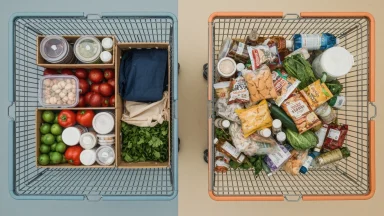
Does your grocery receipt feel more like a car payment lately? You’re not alone. As household budgets tighten, many families are looking for practical ways to cut costs without sacrificing quality. The good news is that one of the most powerful savings tools is likely already in your pocket: your smartphone. While many remember the era of meticulously clipping paper coupons from the Sunday paper, that time-consuming ritual has been replaced by a faster, smarter, and more effective digital alternative.
This evolution from paper to pixels represents more than just convenience; it’s a basic shift in how we save. Digital coupon platforms, from store-specific apps to cashback services, have democratized savings, making it accessible to everyone, not just the hyper-organized. Instead of generic offers, these tools can provide personalized discounts based on your family’s actual purchasing habits. This means more savings on the products you already buy and love, transforming budgeting from a chore into an integrated, almost effortless part of your shopping routine.
But where do you start? The world of digital discounts can seem fragmented and overwhelming. This guide is designed to be your definitive map. We will navigate the best places to find valuable digital coupons, provide a step-by-step walkthrough for redeeming them flawlessly at checkout, and reveal advanced strategies like ‘stacking’ to maximize every dollar. By the end, you’ll have a complete system to turn your phone into a powerful ally against rising grocery prices.
The Digital Shift: Why Coupons Went Virtual
Many of us remember the era of paper coupons. It involved dedicated scissors, a pile of Sunday newspapers, and a thick envelope or binder meticulously organized for the weekly grocery trip. For decades, this process was central to household budgeting, a tangible way families practiced the art of home economics with printed coupons and stretched their dollars.
Then, the landscape changed dramatically with the rise of the smartphone. The shift from physical to digital wasn’t just a small step; it was a complete transformation of shopper behavior. According to data from a recent Inmar Intelligence report, digital coupon redemptions have consistently outpaced paper for several years, with the gap growing each quarter. The change was swift.
The main reason for this migration is undeniable convenience. Why would anyone spend an hour clipping and sorting when a few taps on an app can achieve the same result — and no more risk of paper cuts! The underrated factor here is the reduction in mental load; managing a physical coupon collection required a level of mastering market organization that felt like a part-time job. Digital tools simply erased that barrier to entry.
Suddenly, significant savings were accessible to everyone, not just the hyper-organized planner.
This digital evolution also offers subtle but important benefits. Retailers can now deliver personalized offers based on your shopping history, which is a core concept in achieving smart home economics. Instead of getting a random coupon for a product you’d never buy, you get a discount on your family’s favorite brand of cereal or yogurt. This technology makes saving feel less like a hunt and more like an integrated part of your shopping routine.
This transition from paper to pixels has done more than just update an old practice; it has fundamentally redefined how modern families can achieve their savings goals.
Finding Your Fortune: Where to Discover Digital Discounts
Once you’ve made the switch from paper, the next step is knowing where to look. The world of digitais (digital) coupons isn’t a single, central marketplace. Instead, it’s a collection of different sources, each with its own strengths and weaknesses. Mastering them is the key to maximizing your budget. Your phone can become your most powerful savings tool.
The most direct route to savings is often right at the source: your favorite grocery store’s own application. These apps are specifically designed to reward loyalty with personalized deals based on your past purchases. A recent study from the Food Marketing Institute found that shoppers who actively use their store’s app save an average of 12% more per trip than those who don’t. For anyone serious about a well-organized shopping trip, integrating the store app is a non-negotiable first step.
Top Apps and Platforms for Digital Coupons
Beyond individual store apps, a whole ecosystem of third-party platforms exists to aggregate deals from hundreds of retailers. These apps generally fall into two categories: coupon aggregators and cashback services. Choosing between them is like picking a tool from a toolbox; you wouldn’t use a hammer to turn a screw, and you wouldn’t use a cashback app for an immediate discount at the register. The underrated factor here is understanding which type of app best fits your shopping style.
To make sense of the options, here is a quick breakdown of the most common platform types:
- Grocery Store Apps (e.g., Kroger, Albertsons): These are your frontline for savings. You digitally “clip” coupons directly to your loyalty card.
- Pros: convenient, offers are tailored to your buying habits, savings are applied instantly at checkout.
- Cons: Deals are only valid at that specific store or its affiliates.
- Cashback Apps (e.g., Ibotta, Fetch Rewards): These platforms give you money back on purchases after the fact. You typically link your store loyalty account or scan your receipt to claim offers.
- Pros: Can be used at a wide variety of stores, allows you to “stack” savings on top of store sales and other coupons.
- Cons: Requires an extra step after shopping, and payouts may require reaching a minimum threshold (often $20).
Browser Extensions and Their Role
For online shoppers, browser extensions are the secret weapon for effortless savings. Tools like Rakuten or Capital One Shopping install directly into your web browser—like a tiny, helpful savings assistant—and automatically search for and apply coupon codes when you reach an online checkout page. This completely removes the need to manually search for codes. Suddenly, you have the modern edge in savings without lifting a finger.
Of course, this convenience comes with a trade-off. For these extensions to work, they need to see what you’re buying. Is the automatic application of a 15% discount code worth sharing your purchasing data? The data suggests most people think so, with a recent report from Forrester Research indicating that over 60 million U.S. households use at least one shopping extension. Ultimately, combining these different tools is the path to unlocking your family’s savings potential.
Your ideal strategy likely involves a combination of these sources—using a store app for weekly groceries, a cashback app for special promotions, and a browser extension for all your online purchases. The key is to build a system that works for you without causing burnout.
…even with restrictions, strategic shoppers can save an additional 15-20% by aligning sales with just one coupon.
— Dr. Anya Sharma, Consumer Finance Expert
| Source Type | How It Works | Best For | Key Pro | Key Con |
|---|---|---|---|---|
| Grocery Store Apps | You digitally “clip” coupons and link them to your store loyalty account. | Weekly grocery shopping at your primary store. | Savings are applied instantly and offers are personalized. | Deals are only valid at that specific retail chain. |
| Cashback Apps | You scan your receipt or link loyalty accounts to get money back after a purchase. | Stacking savings on top of sales and other coupons. | Can be used at a wide variety of stores. | Requires an extra step and payouts often have a minimum threshold. |
| Browser Extensions | Automatically finds and applies coupon codes at online checkout pages. | Effortless savings for any online shopping. | Completely automates the process of finding codes. | Requires sharing your purchasing data with the extension. |
Mastering the Art of Digital Coupon Redemption
Finding great digital coupons is only half the battle. The real magic happens at checkout, but getting there successfully requires a clear process. Unlike their paper counterparts, you can’t just hand a digital offer to the cashier. Instead, they are tied to your account and require a few specific actions to ensure they apply correctly, turning potential savings into actual dollars back in your wallet.
The process is surprisingly straightforward once you get the hang of it. It’s less about technical skill and more about forming a consistent habit. Think of it like programming your coffee maker—you do it once, and then you get to enjoy the benefits every morning with minimal effort. The key is understanding the simple, required steps before you even walk into the store.
Step-by-Step: From Clip to Checkout
Successfully using a digital coupon involves a few key touchpoints within a store’s app or website. Missing any one of these can result in the discount not being applied. Following this sequence removes the guesswork and makes your checkout experience smooth. It’s a core part of any strategic shopper’s market organization.
Linking Your Loyalty Card
This is the foundational step. Your store loyalty card or phone number is the bridge that connects your digital account to the physical cash register. Without this link, the system has no way of knowing which coupons you have “clipped.” The checkout scanner needs to identify you to pull up your saved offers.
To do this, simply log into the grocery store’s app or website and navigate to your account settings. You’ll find an option to add or link your loyalty card number. Once entered, any coupons you activate will be tied to that card, ready to be used when you scan it or provide your phone number at checkout.
Activating Offers
Simply seeing a coupon in an app doesn’t mean it’s ready to use. Most platforms require you to manually “clip” or “activate” the offer by tapping a button. This action adds the coupon to your virtual wallet. A recent report from the market research firm IRI indicated that an estimated 18% of available digital grocery coupons go unused simply because shoppers forget to tap the activation button before purchasing the item.
Make a habit of browsing and activating your coupons before you build your shopping list. This ensures you’re not just buying what you need, but you’re also incorporating the best available deals into your plan. It’s a small click with a big impact.
Strategic Stacking: Maximizing Your Savings
Once you are comfortable with the basics, you can explore more advanced savings strategies. Coupon stacking is the practice of using multiple discounts on a single item. This is where the modern edge in family savings shines. The most common form of stacking involves combining a manufacturer’s digital coupon with a store’s digital coupon or a weekly sale price.
For example, a box of cereal might be on sale for $3.50, down from its regular $4.99. Your store app may offer a store-specific coupon for $1.00 off that same box. At the same time, the manufacturer might have a digital coupon available for $0.75 off. If the store’s policy allows stacking, how does this work? The register first applies the sale price ($3.50), then deducts the store coupon ($2.50), and finally removes the manufacturer coupon. Your final price becomes a mere $1.75.
Not all stores permit stacking digital coupons. It is primary to read the fine print in the store’s coupon policy, which is usually available on their website. Some retailers may only allow one digital coupon per item, while others might cap the total discount. Dr. Anya Sharma, a consumer finance expert, suggests that even with restrictions, strategic shoppers can save an additional 15-20% by aligning sales with just one coupon.
Common Mistakes to Avoid
Even seasoned savers can make mistakes. The digital format, while convenient, introduces new potential pitfalls that can lead to frustration at the register—and we all know that feeling of holding up the line while the cashier tries to figure out why a discount didn’t apply.
Being aware of these common errors can save you both time and money. Here are the top issues to watch for:
- Ignoring Expiration Dates: Digital coupons have firm expiration dates. Unlike a paper coupon you might see every time you open your wallet, a digital one is out of sight and out of mind. Always double-check dates when you clip them.
- Mismatching the Product: This is the most frequent error. A coupon for a 12-ounce box of crackers won’t work on the 8-ounce family size. Pay close attention to details like size, flavor, and quantity requirements specified in the coupon’s terms.
- Forgetting to Scan Your Loyalty Card: It sounds obvious, but it happens. If you don’t scan your card or enter your phone number, the entire system fails. This single action is your key to unlocking family savings potential.
- Assuming All Stores Stack Coupons: As mentioned, policies vary wildly. Never assume you can stack a manufacturer’s and a store’s digital offer. A quick check of the store’s policy online can prevent disappointment.
Building a fluid grocery organization system that includes a pre-shopping coupon check is the best defense against these simple but costly mistakes. A few minutes of prep at home avoids several minutes of hassle in the store.

Beyond the Basics: Advanced Digital Coupon Tactics
So you’ve mastered clipping and redeeming. That’s a huge first step. But the world of digital coupons has layers, and combining different saving methods is where you can see a significant impact on your grocery bill. It’s less about just finding a coupon and more about strategically deploying it for maximum effect.
This approach requires a shift in thinking. You’re no longer just a shopper; you become a savings strategist. The key is understanding that coupons, sales, and cashback offers are not separate tools. They are interlocking pieces of a puzzle that, when assembled correctly, reveal a much lower final price.
Synergy with Sales and Promotions
The most straightforward advanced tactic is the coupon match-up. This involves pairing a manufacturer’s or store’s digital coupon with an active in-store sale. Think of it like a planned offensive for your budget. Instead of using a $1.00 coupon on a regularly priced $5.00 item, you wait for that item to go on sale for $3.50. Now, that same coupon makes the final price $2.50—a 50% total savings.
Executing this requires proactive planning. Before your shopping trip, sit down with the weekly store flyer (usually available online) and your coupon apps. Cross-reference what’s on sale with the coupons you have saved. The data suggests this is highly effective; a report from a leading retail analytics firm showed that shoppers who consistently match coupons to sales save an average of 22% more per trip than those who only use one method. Effective strategic market organization makes this process nearly automatic over time.
This is where your efforts pay off.
Integrating with Cashback Programs
The real power move is layering cashback offers on top of your sale-plus-coupon combinations. Cashback apps and services work differently from coupons because they provide a rebate after the purchase is complete. You pay the discounted price at the register, then scan your receipt to get money sent back to your account. It’s like a secret, final discount.
Let’s use a real-world example. A popular brand of yogurt is on sale for $4.00, down from $5.50. You have a $1.00 digital coupon, bringing your out-of-pocket cost at the register to $3.00. But what if a cashback app is also offering $0.85 back on that exact product? After scanning your receipt, your final, true cost drops to just $2.15. This multi-layered approach is the core of unlocking family savings potential in the modern age.
What most people miss is checking the cashback apps before they shop to add offers to their account. Many offers need to be activated first—a simple tap that can save you real money. Combining sales, modern digital coupons, and cashback rebates is the triple threat of grocery savings. The key is understanding each store’s specific policy on combining offers, as they can differ slightly.
The Future of Savings: Trends in Digital Couponing
The world of digital savings is moving faster than ever, and the simple clip-and-save coupon is getting a significant tech upgrade. Artificial intelligence (AI) is at the forefront of this shift, learning your family’s purchasing habits to deliver offers that are personally relevant. Instead of getting a random coupon for cat food when you only own a dog, the system knows you buy a specific brand of yogurt every single week and sends a discount directly to your phone. It’s about precision, not just volume.
This personalization is the real turning point. According to consumer tech analyst Dr. Evelyn Reed, AI-driven promotions can increase coupon redemption rates by over 30% simply by making offers impossible to ignore. Soon, your entire approach to streamlined shopping could be guided by an app that predicts your needs. Imagine your smart refrigerator noticing you’re low on milk and automatically finding the best available coupon for your preferred brand—that’s the direction we’re headed.
But what else is on the horizon? Augmented reality (AR) features are starting to appear in some retail apps, allowing you to point your phone at a store shelf to see virtual tags highlighting deals. This turns your regular grocery run into an interactive treasure hunt for savings. The line between the digital and physical shopping experience is blurring.
Ultimately, the integration of these digital tools into our daily lives—and even our homes—is the biggest trend. The principles of smart home economics suggest that connected devices will become central to managing household budgets. This shift means staying informed is more important than ever, as the tools for saving become as refined as the products we buy.
Your First Step to Smarter Savings
Armed with these strategies, the path to significant savings is clear. But knowledge is only powerful when put into action. The most impactful takeaway isn’t a complex stacking formula, but a simple commitment to change one small habit. On your very next shopping trip, challenge yourself to try just one new technique from this guide. Whether it’s downloading your grocery store’s app for the first time, checking a cashback offer before you buy, or intentionally matching one coupon to a sale item, take that single step. Track the result. Was it easier than you thought? How much did you save? Starting small is the most effective way to build a lasting, high-impact savings habit that will benefit your family’s budget for years to come.
Frequently Asked Questions About Digital Coupons
Are digital coupons always better than paper coupons?
Not necessarily. Digital coupons offer unparalleled convenience and personalization, but some stores have more restrictive stacking policies for them. Paper coupons can sometimes be combined more freely. The most effective strategy often involves using both digital for ease and paper for specific stacking opportunities.
Can I use multiple digital coupons on one item?
This practice, known as ‘stacking,’ depends entirely on the store’s coupon policy. Some retailers allow you to combine a manufacturer’s digital coupon with a store’s digital coupon. using two manufacturer’s offers on one item is almost never permitted. Always check the store’s policy online.
What happens if my digital coupon doesn’t scan at checkout?
First, politely notify the cashier. Double-check that you purchased the exact product specified in the offer, including the correct size, flavor, and quantity. Also, confirm that you activated the coupon in the app before checkout. If it still fails, the cashier may be able to enter it manually.
How often do digital coupons refresh or expire?
Expiration dates and refresh rates vary widely. Many grocery store apps release new offers weekly, often on a Tuesday or Wednesday to align with their sales flyer. individual coupons can expire in a few days or last for over a month, so always check the terms when you clip an offer.
Is it safe to link my credit card to coupon apps?
Reputable, well-known coupon and cashback apps use reliable encryption and security standards similar to banking applications to protect your data. it’s key to use strong, unique passwords and enable two-factor authentication if available. Stick to apps with a long history and positive reviews in the app store.