That familiar feeling of leaving the grocery store with a cart full of items, a receipt that makes you wince, and the nagging suspicion you forgot the one thing you went for. It’s a common story, but the true cost of a disorganized shopping trip goes far beyond that single moment of frustration. It’s a silent drain on your finances, chipping away at your budget week after week, turning a necessary errand into a source of stress.
This isn’t just about impulse-buying a new brand of cookies. The real damage lies in the combination of food waste from forgotten produce, duplicate purchases of items already hiding in your pantry, and the mental fatigue of constantly asking “what’s for dinner?”. Over time, this cycle of inefficiency doesn’t just strain your wallet; it consumes valuable time and energy that could be better spent with your family. The evidence suggests that households without a concrete plan can waste nearly a quarter of their groceries, turning good intentions into expensive trash.
This guide provides a complete system to reclaim control. We’ll move beyond simple tips and build a streamlined process covering every stage of the shopping cycle. You’ll learn the foundational strategies of meal planning and pantry audits, master in-store tactics to navigate aisles and coupons effectively, and implement post-shopping routines to maximize the life of your groceries. The goal isn’t perfection; it’s a practical, repeatable framework that transforms your market trips from a source of stress into a powerful tool for family savings.
Why a Disorganized Market Trip Costs You More Than Time
A quick trip to the market for just “a few things” often turns into a costly adventure. Without a clear plan, you wander the aisles, grabbing items that look appealing and inevitably forgetting the one thing you actually needed. It’s like trying to navigate a new city without a map; you might eventually find your destination, but you’ll waste a lot of time and fuel—or in this case, money.
This disorganization hits your wallet directly. What most people miss is the staggering cost of impulse buys and the resulting food waste. In fact, research from the Journal of Home Economics suggests that households shopping without a list can end up wasting up to 23% of their purchases due to spoilage or duplication. But what’s the real financial damage from those extra snacks and forgotten leftovers? Over a year, this can add up to hundreds of dollars, a major barrier to unlocking your family’s savings potential.
Then there’s the frustration of buying something you already have—and we’ve all done it—like that second jar of mustard or another bag of rice, simply because you weren’t sure what was in your pantry. This is more than just a minor annoyance.
It is wasted money.
The cumulative effect of these repeated mistakes goes far beyond a single bloated receipt, creating a cycle of inefficiency that strains your budget and your time. The key is understanding that mastering market organization is not about perfection, but about putting simple, effective systems in place to protect your family’s finances.
The Foundational Pillars of Effective Market Planning
Walking into a grocery store without a plan is like trying to navigate a maze blindfolded. You’re almost guaranteed to make costly mistakes. The single best defense against budget-breaking impulse buys is a well-crafted strategy before you ever leave the house. In fact, research from the University of Pennsylvania suggests shoppers who stick to a list spend up to 23% less on average. This is the foundation of smart home economics.
This preparation is your secret weapon.
Mastering the Art of Meal Planning
Meal planning often gets a bad rap, conjuring images of rigid, boring weekly menus. The reality is far more flexible. The goal isn’t to schedule every single bite but to create a general framework for the week’s main meals. This simple act eliminates the daily “what’s for dinner?” panic and prevents last-minute, expensive takeout orders.
What’s the secret to making it stick? Don’t overcomplicate it. Start by planning just three to four dinners for the upcoming week, focusing on recipes that might share ingredients. Think of it like a football coach scripting the first few offensive plays of a game; it establishes momentum and prevents unforced errors. Having this basic structure is a key part of any ultimate grocery organization guide.
Pantry Audit: What You Have vs. What You Need
Before you can write an effective list, you must know your inventory. A quick scan of your pantry, refrigerator, and freezer is necessary. What most people miss is looking at the back of shelves or into the depths of the freezer, where forgotten food often goes to expire. This audit directly combats food waste—a major drain on household finances.
The core principle here is “first in, first out” (FIFO). It’s a simple system of rotating your stock—a fancy way of saying you should use the older items before opening the new ones. The Natural Resources Defense Council (NRDC) reports that the average family throws out a significant amount of food annually, much of it from items that were purchased and then forgotten. A thorough pantry audit transforms your kitchen from a black hole of forgotten food into a resource for strategic family savings.
Here is a simple pre-shopping checklist to run through:
- Decide on 3-5 main meals for the week.
- Check your pantry, fridge, and freezer for ingredients you already own.
- Make a short list of items nearing their expiration date to prioritize using.
- Build your shopping list based only on what’s missing for your planned meals and depleted staples.
- Do a final check for digital coupons that match the items on your list.
With a detailed list created from your meal plan and inventory audit, you have completed the most difficult part of market organization. The next challenge is executing that plan inside the store itself, where sales displays and snack aisles are designed to derail your focus.
An organized pantry is more than just tidy shelves; it’s a statement of intent. It says you value your time, your money, and your peace of mind. When your kitchen is in order, the daily chaos of life feels just a little more manageable.
— Dr. Eleanor Vance, Author of ‘The Frugal Kitchen’
| Item | Brand-Name Price (Example) | Store-Brand Price (Example) | Potential Savings |
|---|---|---|---|
| Breakfast Cereal (18 oz) | $5.89 | $3.49 | $2.40 (41%) |
| Pasta Sauce (24 oz) | $3.99 | $2.29 | $1.70 (43%) |
| Peanut Butter (16 oz) | $4.79 | $2.99 | $1.80 (38%) |
| Canned Black Beans (15 oz) | $1.69 | $0.99 | $0.70 (41%) |
Navigating the Aisles: Smart Strategies for In-Store Success
Entering the grocery store without a plan is like trying to navigate a maze blindfolded. You have your meticulously crafted shopping list, but the store itself is designed with thousands of colorful distractions and tempting end-cap displays meant to derail your budget. Success here isn’t just about what you buy; it’s about how you buy it. This is where your pre-trip planning pays off.
Your Shopping List: Your Unbreakable Commandment
Treat your shopping list as the ultimate authority on your trip. It is your financial shield against the barrage of impulse buys. A report from the Marketing Science Institute found that over 50% of grocery purchases are unplanned, a number that can wreck a family’s monthly food budget. The key is to commit to the list with almost zero exceptions.
Think of it like a pilot’s pre-flight checklist; it’s not a suggestion, it’s a protocol to ensure a safe and successful outcome. Do you really need that new flavor of chips that isn’t on the list? Probably not. Sticking to your plan is one of the most powerful tools in your arsenal for mastering market organization for family savings. It requires discipline. But your wallet will thank you.
Coupon Power: Maximizing Savings at Checkout
Coupons are an amazing tool, but they can also be a trap. The goal is to use coupons for items you were already going to buy, not to let the coupons dictate your purchases. Integrating them effectively means planning ahead and matching savings opportunities to the items on your unbreakable list. This small shift in perspective changes coupons from a source of random purchases to a strategic savings amplifier.
Printed Coupons: The Traditional Advantage
There’s a tangible benefit to old-school paper coupons. You can physically sort and organize them before you leave home, attaching them directly to your shopping list. What many people forget is that some stores still offer “double coupon” days, an event that can dramatically increase savings on specific items. A deep dive into home economics reveals printed coupons still hold significant power for those willing to do the clipping.
Digital Coupons & Apps: Modern Savings Hacks
Nearly every major grocery chain now has a mobile app loaded with digital coupons. These are incredibly convenient, allowing you to “clip” deals with a simple tap. According to research from eMarketer, over 145 million adults in the U.S. use digital coupons. The trick is to load the relevant coupons before you enter the store — or at least before you reach that specific aisle — to avoid getting distracted by other offers on your phone while shopping. Using these tools effectively is a hallmark of modern family savings in the digital age.
Strategic Aisle Navigation and Price Comparisons
Most grocery stores are laid out to maximize spending. High-margin processed foods often occupy the center aisles, while essentials like produce, dairy, and meat are on the perimeter. By shopping the perimeter first, you fill your cart with the items that likely make up the bulk of your list, leaving less room (and budget) for tempting extras. It’s a simple change that can have a big impact.
Beyond store layout, the most underrated skill is comparing unit prices. The bigger box isn’t always cheaper. Look for the price-per-ounce or price-per-100-grams tag on the shelf label. This is the only true way to compare value between different brands and sizes. Often, the store brand offers a nearly identical product for a fraction of the cost.
Here’s a quick look at how these savings can stack up on common items:
| Item | Brand-Name Price (Example) | Store-Brand Price (Example) | Potential Savings |
|---|---|---|---|
| Breakfast Cereal (18 oz) | $5.89 | $3.49 | $2.40 (41%) |
| Pasta Sauce (24 oz) | $3.99 | $2.29 | $1.70 (43%) |
| Peanut Butter (16 oz) | $4.79 | $2.99 | $1.80 (38%) |
| Canned Black Beans (15 oz) | $1.69 | $0.99 | $0.70 (41%) |
These individual savings seem small, but this consistent practice of smart home economics can easily save a family hundreds, if not thousands, of dollars over the course of a year. The cumulative effect of these mindful choices is what builds real financial breathing room.
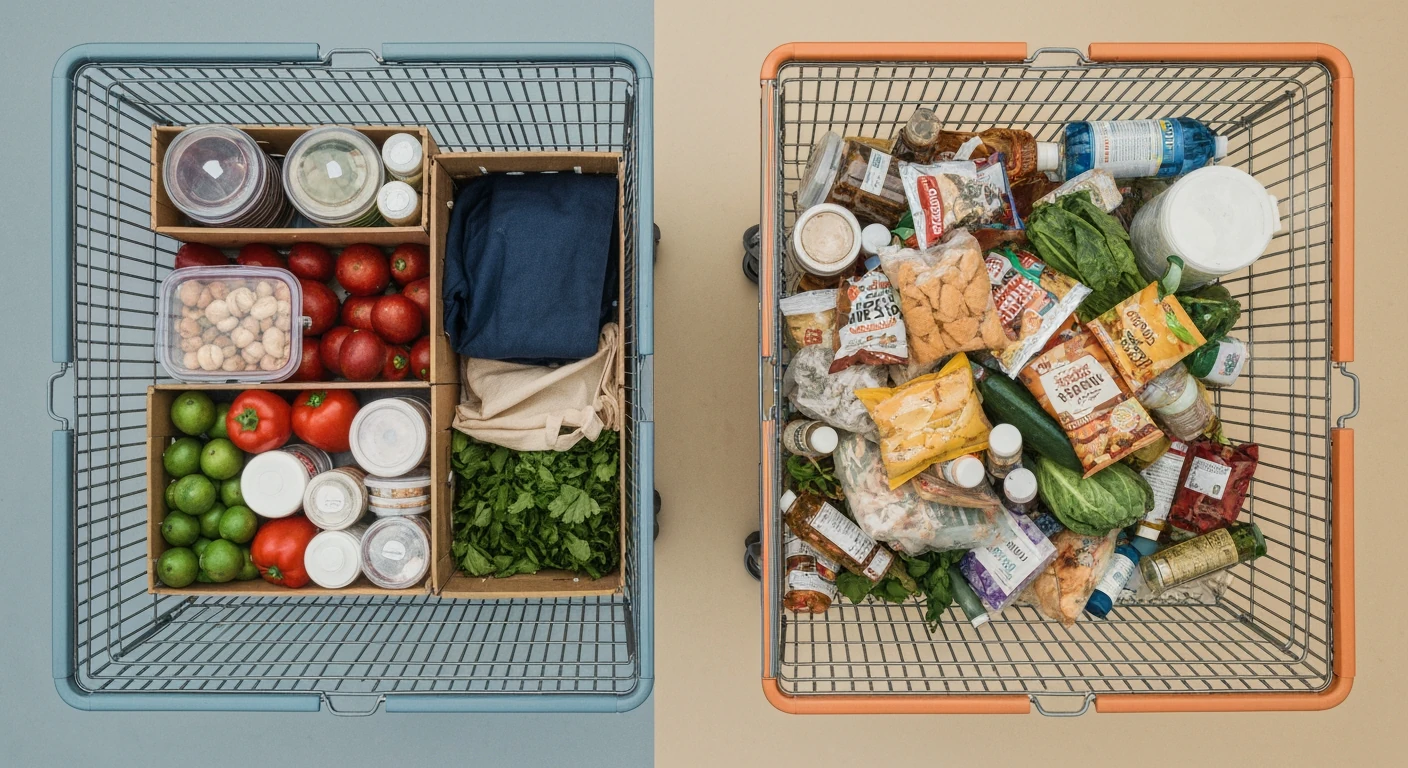
Post-Shopping Efficiency: Storage, Organization, and Future Prep
The car is unpacked and the groceries are piled on the counter. Mission accomplished? Not quite. The next thirty minutes are arguably the most important for your budget and sanity, determining whether your haul becomes delicious meals or contributes to food waste. According to data from the US Department of Agriculture, a significant portion of food waste happens right in our homes. This is where a solid plan for mastering market organization pays off.
Transforming your kitchen counter chaos into organized potential is less about finding more time and more about creating an efficient system. It’s a simple habit that prevents that all-too-common discovery of spoiled produce you just bought a few days ago.
Unpacking Smart: Designating Zones in Your Fridge & Pantry
Before a single item goes away, take a moment to designate zones. This strategy is built on the First In, First Out (FIFO) principle—placing new items behind older ones to ensure nothing expires in the dark corners of your fridge. It’s like managing a tiny grocery store shelf. You wouldn’t want the oldest milk hidden behind the new carton, would you?
In the refrigerator, create specific homes for different categories. The door, which experiences the most temperature fluctuation, is perfect for condiments, not milk or eggs. Use crisper drawers for their intended purpose, adjusting humidity settings for fruits or vegetables. The top shelf can be for leftovers and ready-to-eat items. What most people miss is that the pantry deserves the same treatment; grouping grains, canned goods, and baking supplies makes finding ingredients for a recipe a quick scan instead of a frustrating dig. Creating your ultimate blueprint for grocery organization makes this process nearly automatic over time.
Prepping Produce for Extended Freshness
Your fresh produce requires immediate attention to prevent it from wilting before its time. Taking just 15-20 minutes to prep vegetables and fruits upon returning home can extend their life by days and makes future meal prep significantly easier. It’s the secret to making healthy choices the most convenient ones.
Start by washing and thoroughly drying leafy greens like lettuce and kale. Store them wrapped in a dry paper towel inside a bag or container—no more finding a forgotten bag of spinach that’s turned to liquid. Hardy vegetables like carrots, celery, and bell peppers can be chopped and stored in water in airtight containers, ready for quick snacks or as a base for weeknight stir-fries. Berries, are best left unwashed until just before eating to prevent mold.
This small upfront effort is a core part of smart home economics. By processing your groceries immediately, you are actively reducing waste and ensuring that every dollar—and every coupon—spent at the store contributes directly to your family’s meals, not the compost bin.
Beyond the Basics: Advanced Tactics for the Savvy Family Shopper
Once you have a system for getting groceries into your home and put away, you can graduate to the next level of savings. Mastering your weekly shopping list is one thing; consistently outsmarting the store’s pricing strategy is another entirely. These advanced tactics move beyond simple organization and into strategic financial management for your household.
Unlocking Cashback and Loyalty Rewards
Many shoppers view cashback apps and loyalty programs as a small, occasional bonus. The reality is that they can be a significant source of savings when used with intention. Instead of just passively collecting points, think of these programs as an active part of your shopping plan. Combining a store’s digital offer with a manufacturer’s coupon and a cashback rebate on a single item is the modern way to get extreme savings.
The numbers don’t lie. A study from the Consumer Research Institute suggests that families who consistently stack rewards save an average of 15% more on their grocery bills than those who only use one savings method. For a family spending $800 a month on groceries, that’s a potential saving of $1,440 over a year. It’s a far cry from just a few cents back.
The key is to layer your discounts. Use a cashback app to scan your receipt after using the modern edge of digital coupons at the checkout. Some shoppers even pay with a rewards-based credit card to get a third layer of benefits on the same purchase. This approach turns a simple grocery run into a well-executed plan for savings.
The Art of Bulk Buying: When Does it Save?
Warehouse clubs and bulk aisles promise major savings, but the truth is more complicated. Buying in bulk isn’t an automatic win; it’s a calculated risk that requires you to know your family’s consumption habits intimately. Without a plan, a pallet of paper towels or a five-pound bag of almonds can become a costly mistake. Think of it less like saving money and more like making a short-term investment in your pantry.
Thinking about taking the plunge? Here is a simple breakdown of what to consider:
- Pros: The most obvious benefit is a lower cost per unit. You also make fewer shopping trips, which saves time and gas, and you build a small stockpile for unexpected situations.
- Cons: The high upfront cost can strain a monthly budget. There’s a significant risk of food waste if you don’t use items before they expire, and the items themselves demand a large amount of storage space.
Perishables vs. Non-Perishables
Here is where the bulk-buying strategy really gets tested. For non-perishable items like canned beans, rice, pasta, and toilet paper, buying in bulk is almost always a smart move if you have the space and cash. These items have a long shelf life, so the risk of spoilage is nearly zero.
Perishables are a different story. That family pack of chicken breasts or the giant clamshell of spinach is only a good deal if you consume it all before it spoils. But do you have a concrete plan for all of it? This requires excellent meal planning and, often, a deep freezer. What most people miss is that a spoiled bulk item negates the savings on several other successful bulk purchases.
Storage Space Considerations
That 48-pack of toilet paper isn’t a bargain if it lives in your hallway for a month. Before you buy, you must be honest about your available storage. A cluttered home can cause stress that far outweighs the few dollars saved. The space in your home is valuable real estate.
A practical tip is to designate a specific “bulk storage” area and never buy more than what fits comfortably within it. This self-imposed limit prevents your savings strategy from overwhelming your living space, making it a sustainable part of your holistic household economics.
Seasonal Shopping and Price Cycle Awareness
True market mastery involves understanding that prices for most items fluctuate in predictable patterns. These aren’t just the obvious seasonal changes—like cheaper strawberries in June—but also subtle, store-specific sale cycles. Many non-perishable goods, from breakfast cereal to detergent, go on deep discount every 6 to 10 weeks.
This is where observation pays off. Start a simple price book or a note on your phone to track the prices of your 10-15 most purchased items over a couple of months. You will quickly spot the rhythm. When you see your favorite coffee hit its cyclical low of $6.99 instead of its usual $9.49, you know it’s time to buy a few bags. This is a core tenet of strategic market organization for family savings.
Aligning your pantry stocking with these cycles transforms shopping from a weekly chore into a proactive hunt for value. You stop buying things simply because you ran out and start buying them because the price is right, ensuring you are always ahead of the curve.
Sustainable Savings: Making Market Organization a Family Habit
Mastering advanced strategies is one thing, but the real, lasting impact of organização de mercado comes from consistency. Turning these practices into a routine transforms them from a chore into a powerful family habit. The goal is to make smart shopping an automatic part of your weekly rhythm, much like tidying up before bed. It simply becomes what your family does.
But how do you get everyone on board? The key is to assign age-appropriate roles. Think of it like a well-run kitchen during meal prep—everyone has a job. Younger kids can be in charge of finding items on the lower shelves or crossing them off the list, while teens can take on the responsibility of tracking digital coupons. A recent Cornell University paper on family economics found that involving children in grocery planning can reduce impulse buys by up to 22%.
What most people miss is that these small, weekly actions are teaching profound lessons about value, planning, and delayed gratification. This isn’t just about cutting your grocery bill; it’s a practical, hands-on course in financial literacy for your kids. These skills are the foundation for achieving long-term family savings and financial stability. You are building a framework for making sound financial decisions that extends far beyond the supermarket aisles.
Ultimately, making grocery organization a shared activity doesn’t just reduce waste and improve your budget. You are preparing your children for a future where they can confidently manage their own resources.
From Grocery Lists to Life Goals
Mastering your grocery budget does more than just add a few dollars back into your account; it fundamentally changes your relationship with your resources. Each organized trip, each meal planned, and each item used before it expires is a small act of reclaiming control. This newfound efficiency frees up not only money but also precious mental energy, reducing the daily friction of household management.
What could your family do with an extra hundred dollars and a few extra hours each month? The principles of auditing, planning, and executing with intention don’t have to stop at the pantry door. It begs the question: what other area of your life could be transformed by applying this same simple, powerful system?
Frequently Asked Questions
How often should I do a pantry inventory?
A quick weekly scan before you make your shopping list is ideal to catch staples you’re low on. A deeper inventory, checking expiration dates and forgotten items in the back, should be done monthly to prevent waste and ensure you’re using what you have.
What’s the best way to organize my shopping list?
The most effective method is to organize your list by store aisle or category (e.g., Produce, Dairy, Canned Goods, Meats). This prevents backtracking, saves time, and helps you resist impulse buys as you move logically through the store.
Are digital coupons always better than printed ones?
Not necessarily. Digital coupons offer convenience, but printed coupons can sometimes provide higher-value discounts or be used in stores that offer “double coupon” days. The best strategy is a hybrid approach: check your store’s app for digital deals and supplement with printed coupons for items on your list.
How can I involve my kids in market organization?
Involving kids makes it a fun learning experience. Younger children can help find items in the pantry during inventory or cross things off the list in the store. Older kids can be responsible for checking for digital coupons or even planning one simple meal for the week.
What are common mistakes to avoid when planning a grocery trip?
The biggest mistakes are shopping on an empty stomach, which leads to impulse buys, and going without a list based on a meal plan. Another common error is being lured by sales on items you don’t actually need, which ultimately leads to waste rather than savings.