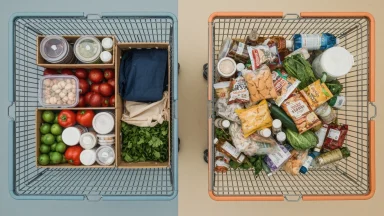
Does your grocery bill feel like a runaway train, consistently speeding past your budget with no end in sight? You’re not alone. For many households, the weekly trip to the supermarket is a source of financial stress, filled with impulse buys and culminating in a fridge full of good intentions that often end up in the trash. This cycle of overspending and waste can feel impossible to break, turning a necessary chore into a frustrating drain on your time and money.
The issue runs deeper than just grabbing a few extra snacks. It’s a systemic problem rooted in a lack of strategy. According to the Natural Resources Defense Council, the average family discards nearly a quarter of the food they purchase, which is equivalent to throwing one full grocery bag away for every four you bring home. This waste represents a significant, yet often invisible, leak in your household budget. Gaining control over your grocery process is not about extreme penny-pinching; it’s about smart, intentional planning that yields substantial savings and reduces your environmental footprint.
This full guide provides a complete blueprint for mastering your grocery routine from start to finish. We’ll walk you through the required pre-shopping preparations, including effective meal planning and kitchen inventory techniques that build a smarter list. Then, we’ll equip you with in-store strategies to navigate aisles like a professional, helping you decipher deals and resist the psychological traps set by retailers. Finally, you’ll learn post-shopping organization methods to maximize the life of your food, ensuring every dollar you spend is a dollar well-invested in your family’s well-being.
Why a Well-Organized Grocery Approach is Key for Households
Walking into the grocery store without a list feels a bit like setting out on a road trip with no map. You might end up with some interesting things in your cart, but you’ll likely spend more money and time than you intended. A strategic approach to grocery shopping, is one of the most effective tools for managing your household budget and achieving real cuts to your household costs. It transforms a routine chore into a powerful savings opportunity.
This isn’t just about being tidy; it’s about being smart with your money.
The most immediate benefit is the reduction of food waste, which is a silent drain on family finances. What many people don’t realize is just how much of their grocery budget ends up in the trash can. According to a report from the Natural Resources Defense Council (NRDC), the average American family throws away approximately 23% of the food and beverages they buy. That’s like throwing away one of your four grocery bags every single time you shop.
Beyond the direct financial impact, organized grocery planning gives you back your most valuable, non-refundable resource—time. Instead of making three desperate mid-week trips for a forgotten onion or a carton of milk, a single, focused trip can set you up for success. This systematic approach also reduces decision fatigue. Ever spend 15 minutes staring blankly into the fridge, wondering what to make for dinner? A good plan eliminates that mental clutter, making mealtime a smoother, less stressful process that aligns with your practical family budgeting goals.
Ultimately, having a system for your groceries—from the list you make to the way you put items away—creates a positive ripple effect. It provides a clear framework that makes it easier to incorporate other savings tactics, like using a family budgeting and financial planning.
This process directly combats decision fatigue in the store and drastically cuts down on food waste. A study from the University of Pennsylvania’s School of Medicine found that individuals who engage in meal planning have more dietary variety and are less likely to overspend on takeout. What’s the real benefit? You buy only what you need, use what you buy, and avoid that last-minute panic of figuring out what’s for dinner—which often leads to expensive convenience foods.
Mastering Your Pantry and Fridge Inventory
Before you write down a single item, you need to become an auditor of your own kitchen. Taking a quick inventory of your pantry, fridge, and freezer is the most overlooked—and arguably most impactful—step. Think of it like a chef doing stock check before service; they need to know what ingredients are on hand to build the menu. How many times have you come home with a new bottle of ketchup only to find two unopened ones hiding in the back of the pantry?
Create a system. Some people use a small whiteboard on the fridge, while others prefer a shared digital note. As soon as you use the last of the olive oil, it goes on the list. This constant, low-effort tracking prevents both duplicate purchases and the frustration of discovering you’re out of a key ingredient mid-recipe. The underrated factor here is how this small habit compounds into significant ways to cut household costs over time.
Here are the essentials for building your smart list:
- Meal Plan First: Decide on your breakfasts, lunches, and dinners for the week before writing anything else.
- Shop Your Kitchen: Check your pantry, fridge, and freezer. Cross off items from your meal plan that you already have.
- Categorize Your List: Group items by store section (produce, dairy, meat, dry goods). This prevents backtracking and makes shopping faster—a key synergy between home economics and practical efficiency.
- Be Specific: Instead of “cheese,” write “shredded cheddar for tacos.” This specificity keeps you focused and avoids impulse substitutions.
- Note Your Staples: Add household staples that are running low, like paper towels, trash bags, or coffee filters.
With this detailed blueprint in hand, you’re no longer just a shopper. You’re a procurement manager for your home, ready to execute a plan with precision.
The average American family throws away approximately 23% of the food and beverages they buy. That’s like throwing away one of your four grocery bags every single time you shop.
— Natural Resources Defense Council (NRDC)
| Shopping Hours | Pros | Cons |
|---|---|---|
| Peak Hours (e.g., Weekends, 5-7 PM Weekdays) | Fullest shelves, widest selection of fresh produce and meats, more staff available for assistance. | Heavy crowds, long checkout lines, higher stress levels, increased difficulty in comparing prices, more likely to make impulse buys to escape faster. |
| Off-Peak Hours (e.g., Mid-morning Weekdays, Late Evenings) | Fewer people, faster checkout, calmer shopping experience, easier to navigate aisles and compare unit prices. | Some items (especially fresh-baked goods or rotisserie chicken) may be sold out, fewer staff members on the floor. |
In-Store Strategies: Navigating Aisle by Aisle Like a Pro
Walking into a grocery store with a list is one thing; walking out with only what’s on it is another entirely. The supermarket is a carefully designed environment meant to separate you from your money. But with the right mindset and a few tactical moves, you can treat the aisles like a racetrack where you are in complete control of the finish line.
Think of your shopping trip less like a casual stroll and more like a mission. Your goal is to get in, secure your targets, and get out with minimal financial damage. It’s a game you can win. According to a study by the Marketing Science Institute, shoppers who strictly adhere to a list can spend up to 23% less than those who shop without one. That’s a significant saving that adds up over a year.
Your List is Your Compass: Sticking to the Plan
Your grocery list is more than a suggestion; it’s your primary defense against overspending. Before you even grab a cart, take a moment to review your list and commit to it. This simple act of mindfulness reinforces your plan and mentally prepares you to ignore the siren song of unplanned purchases. The structure of your list, categorized by aisle, is the blueprint for an efficient trip that saves both time and money.
One effective strategy is to treat any deviation as a conscious decision, not an accident. If you see something not on your list, ask yourself: do I need this now, or can it wait for the next planned trip? Often, the desire fades once you move to the next aisle. Mastering this discipline is one of the most effective unconventional money hacks for trimming your grocery bill without feeling deprived.
Unmasking Hidden Deals: Unit Prices and Promotions
Promotional signs are designed to grab your attention with bright colors and bold claims like “2 for $5!” or “Family Size Value!” But is it actually a good deal? The only way to know for sure is to look at the unit price. This small number on the shelf tag breaks down the cost by a standard unit of measurement, like per ounce, per pound, or per 100-count.
Comparing unit prices is like having x-ray vision for deals. A large “value” box of cereal might seem cheaper, but its unit price could be $0.28 per ounce, while a smaller, non-sale box is only $0.24 per ounce. The smaller box is the better buy. This skill is a core part of shrewd shopping, and it becomes even more powerful when you learn how to combine great unit prices with other savings methods. Understanding the fundamentals of home economics helps put these small decisions into a larger financial picture.
This is where your couponing skills can really shine. A BOGO (Buy One, Get One) offer combined with a manufacturer’s coupon can drastically lower the cost per item. The key is to only use these offers on products you were already planning to buy. Stocking up on something just because it’s on sale isn’t saving if it’s outside your normal consumption habits.
The Impulse Buy Trap: Strategies to Resist
Impulse buys are the silent budget killers, adding up from a few dollars here and there to a significant overspend. The underrated factor here is that stores are engineered to encourage these very purchases. From the layout to the lighting, everything is optimized to make you spend more.
Psychology of Store Layouts
Have you ever noticed that necessary items like milk, eggs, and bread are almost always located at the back of the store? This is intentional. This layout forces you to walk through numerous aisles filled with tempting products just to get to the basics. Endcaps—the displays at the end of aisles—are premium real estate that brands pay extra for, and they are typically loaded with high-margin, impulse-buy items.
The checkout lane is the final gauntlet. It’s stocked with candy, magazines, and cold sodas precisely because you are a captive audience while you wait. Your willpower might be lower after a long shop, making you more susceptible to a last-minute “treat.” What most people miss is that even the scent of the in-store bakery is often strategically vented through the store to trigger hunger and encourage unplanned pastry purchases.
To counteract these psychological tricks, you need a plan. First, never shop on an empty stomach; a hungry shopper is an irrational shopper. Second, if you’re just grabbing a few things, opt for a handbasket instead of a cart. The physical limitation and weight will make you think twice before adding non-primary items. These small adjustments are central to many practical family budgeting tips that focus on conscious spending.
| Shopping Hours | Pros | Cons |
|---|---|---|
| Peak Hours (e.g., Weekends, 5-7 PM Weekdays) | Fullest shelves, widest selection of fresh produce and meats, more staff available for assistance. | Heavy crowds, long checkout lines, higher stress levels, increased difficulty in comparing prices, more likely to make impulse buys to escape faster. |
| Off-Peak Hours (e.g., Mid-morning Weekdays, Late Evenings) | Fewer people, faster checkout, calmer shopping experience, easier to navigate aisles and compare unit prices. | Some items (especially fresh-baked goods or rotisserie chicken) may be sold out, fewer staff members on the floor. |
Ultimately, choosing when to shop depends on your personal priorities—do you value selection and availability over a calm, efficient experience? Testing different times can reveal the perfect slot for your routine, turning a chaotic chore into a streamlined process.
Post-Shopping Mastery: Storage, Organization, and Longevity
You’ve successfully navigated the aisles and returned home with your haul. The temptation to quickly shove everything into the fridge and pantry is strong, but a few minutes of strategic organization can save you hundreds of dollars in food waste and future headaches. Proper storage is the final, critical step in a successful grocery run. It’s what transforms a cart full of ingredients into a well-managed kitchen resource.
Think of it like being an air traffic controller for your food. Everything needs a designated landing spot to prevent chaos and ensure things run smoothly. According to a study from the University of Arizona, proper food storage can extend the life of fresh produce by up to 78%, directly impacting your wallet. This isn’t just about neatness; it’s about maximizing every dollar you spend and a core part of smart family budgeting.
First In, First Out (FIFO) Principle
Professionals in restaurants and grocery stores live by a simple rule: First In, First Out (FIFO). This means the first items you bought should be the first ones you use. When unpacking, move older products from the back of the pantry or fridge to the front, placing the new items behind them. This simple rotation prevents that forgotten yogurt from expiring or finding a half-used bag of carrots that has turned to mush.
It’s a surprisingly effective system. You’ll naturally grab the older item first, ensuring nothing gets lost in the abyss of your pantry shelves. This one habit alone is a powerful tool for slashing your overall household expenses by minimizing what you throw away.
Optimizing Fridge and Pantry Layouts
Where you store your food matters just as much as when you bought it. Your refrigerator and pantry have different zones, each suited for specific types of items. The underrated factor here is understanding how temperature and humidity vary within these spaces. For instance, your fridge door is the warmest part, so it’s a terrible place for milk or eggs but perfect for less-perishable condiments.
Your fridge’s crisper drawers often have adjustable humidity settings. But do you know which setting is for what? A good rule of thumb is to set one drawer to high humidity for leafy greens and vegetables that wilt (like spinach and broccoli) and the other to low humidity for fruits that release ethylene gas (like apples and pears), which can speed up ripening in other produce.
In the pantry, visibility is everything. Using clear, airtight containers for bulk items like flour, rice, and pasta not only keeps them fresher but also lets you see inventory at a glance. Group similar items together—all your baking supplies in one area, canned goods in another. This simple act of categorizing makes finding what you need effortless, a key strategy for shoppers looking to optimize their savings by combining traditional coupons with digital savings.
Here are five immediate steps to take after every grocery trip:
- Prioritize Perishables: Unpack refrigerated and frozen items first to get them back into a temperature-controlled environment as quickly as possible.
- Prep Produce Smartly: Wash and chop sturdy vegetables like carrots and peppers right away for easy snacking or cooking. wait to wash delicate berries or leafy greens until just before you eat them to prevent mold and spoilage.
- Decant and Contain: Transfer items bought in bulk or in flimsy bags (like cereal, oats, or nuts) into airtight containers. This protects them from pests and preserves freshness.
- Execute the FIFO Shuffle: As you put items away, consciously pull the older versions to the front of the shelf or drawer. This is the most important step for reducing waste.
- Label Everything: For leftovers or prepped meal components, use masking tape and a marker to label the container with the contents and the date it was made. It takes ten seconds but removes all future guesswork.
Mastering your kitchen’s storage system ultimately makes meal preparation faster and less stressful, turning your well-planned grocery list into delicious, budget-friendly meals without waste.
Integrating Coupons and Cashback for Maximum Savings
Once your groceries are neatly put away, the final step in your organization process is financial. It’s about ensuring the savings from your trip are just as organized as your pantry. This means actively integrating coupons and cashback offers into your weekly routine, turning smart shopping into a predictable financial win rather than a happy accident.
You have two main tools at your disposal: printed and digital coupons. While digital coupons are convenient, don’t overlook the value of physical ones. Some of the best deals still arrive in the mail or Sunday paper, and the simple act of clipping them can make you more mindful of your shopping list. What is the best way to keep them from becoming a cluttered mess in your wallet? Having a small, dedicated envelope or folder is one of the simplest and most effective methods. The underrated factor here is the tangible nature of printed coupons; they provide a physical reminder of the savings you’re chasing, a core principle in successful home economics.
On top of coupons, cashback apps add another powerful layer of savings. Platforms like Ibotta require you to select offers before you shop, while others like Fetch Rewards simply ask you to scan your receipt afterward to earn points on specific brands. Rakuten, often works by giving you cash back for shopping through their portal for grocery pickup or delivery. A report from the National Retail Federation found that shoppers who “stack” manufacturer coupons with a store sale and a cashback offer can increase their savings on a single item by over 70%.
The real magic happens when you combine these methods—a strategy that represents the modern savvy shopper’s blueprint.
Before each shopping trip, take ten minutes to sync your plan. First, browse your favorite cashback app for relevant offers and activate them. Then, review your digital store coupons and load them onto your loyalty card. Finally, pull out your folder of printed coupons that match items on your list. This pre-shop ritual is like a quick team huddle before the big game—it aligns all your players for maximum impact.
Building this system transforms saving money from a chore into a smooth part of your grocery routine. The initial effort pays off by consistently lowering your spending, freeing up funds that can be reallocated toward other important parts of your practical family budget and financial goals.
From Shopper to Household CFO
Mastering your grocery organization is more than just a method for saving money on food; it’s a foundational skill in household management. By implementing these strategies, you are not merely cutting costs—you are actively reclaiming control from a retail environment designed to encourage mindless consumption. Each well-planned list, each avoided impulse buy, and each ingredient used before it expires is a small act of financial empowerment. What other areas of your life could be transformed by applying this same level of intention and strategic planning?
Frequently Asked Questions
What’s the best day of the week to do grocery shopping for savings?
For the best balance of savings and selection, aim for mid-week, such as a Wednesday or Thursday morning. Stores are less crowded than on weekends, making it easier to shop mindfully. This is also when many stores release new weekly circulars and mark down items that didn’t sell over the previous weekend.
How can I reduce food waste with better grocery organization?
Reducing food waste starts with planning. Create a weekly meal plan based on what you already have, then make a detailed shopping list. After shopping, use the ‘First In, First Out’ (FIFO) method by moving older items to the front of your fridge and pantry so you use them first, preventing spoilage.
Are digital coupons more effective than printed ones?
Both digital and printed coupons can be effective, and the best strategy often involves using both. Digital coupons offer convenience and can be clipped instantly to a store’s loyalty card. printed coupons sometimes provide higher-value discounts or can be ‘stacked’ with store sales for maximum savings, depending on store policy.
What are primary tools for kitchen pantry organization?
Required tools include clear, airtight containers for bulk items like flour and rice to maintain freshness and visibility. Using tiered shelving helps you see items in the back, while turntables (Lazy Susans) are great for accessing spices and oils. Finally, a simple label maker or chalk pen helps everyone in the household identify contents easily.
How often should I inventory my pantry and fridge?
You should conduct a quick inventory of your fridge and pantry before every shopping trip to avoid buying duplicates. A more thorough, deep inventory and clean-out is recommended on a quarterly basis. This helps you find nearly expired items to use up and keeps your storage spaces clean and efficient.