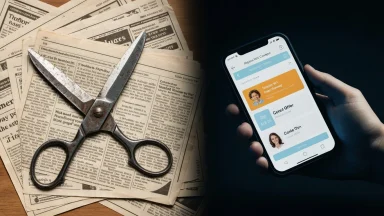
Remember the Sunday morning ritual of spreading newspapers across the kitchen table, scissors in hand, hunting for deals? For decades, this was the cornerstone of family savings. It was a tangible, hands-on process of clipping, sorting, and hoping you remembered to bring the right envelope of paper slips to the store. While effective, it was also time-consuming and often led to a cluttered drawer of expired or forgotten discounts.
The advent of the smartphone has fundamentally changed this landscape. That entire folder of paper can now be managed from a device that rarely leaves our side. This transition from paper to pixels represents more than just convenience; it marks a significant shift in consumer behavior. According to Insider Intelligence, the number of adults in the U.S. using digital coupons is expected to exceed 145 million, highlighting a widespread move towards more accessible and immediate savings methods.
But how does one navigate this new digital terrain effectively? Simply downloading an app is not a strategy. This article serves as your full guide to mastering the world of digital coupons. We will explore the best places to find them, from retailer apps to third-party platforms. More importantly, we’ll detail the specific techniques for redeeming offers, stacking them for maximum value, and avoiding the common pitfalls that cause many to abandon their savings goals. It’s time to turn your phone into a powerful tool for cutting household costs.
The Digital Shift: Why Coupons Went Online
Remember the Sunday paper, spread across the kitchen table, scissors in hand? For decades, that was the peak of family savings—a ritual of clipping, sorting, and organizing little paper rectangles. It was a tangible way to manage expenses, a core part of the synergy between home economics and couponing. But it was also time-consuming, messy, and surprisingly easy to leave your carefully curated collection at home on shopping day.
The real change came with the smartphone. Suddenly, that entire folder of paper slips could live inside a device that was already in your pocket. This transition from paper to pixels wasn’t just a novelty; it completely altered the savings game. A report from Insider Intelligence highlighted that the number of adults in the U.S. redeeming digital coupons is projected to reach 145.3 million. It’s not about paper being obsolete, but about digital’s sheer accessibility.
This shift is about more than just convenience—it’s about efficiency. Instead of manually searching for deals, you can now have them sent directly to you through apps and store loyalty programs. Think of it like this: paper couponing was like maintaining a physical filing cabinet, where things get lost and disorganized. Digital coupons are like a cloud folder that automatically sorts and updates itself. What most people miss is how this simple change helps drastically cut household costs with minimal effort.
The appeal is undeniable. Why spend an hour clipping when you can tap a screen in seconds? For many busy families, the answer is obvious. While there’s still a place for the strategic use of printed coupons, the digital world offers an immediacy that paper simply can’t match. This evolution has made saving money more accessible to everyone, not just the meticulously organized.
Navigating the Digital Coupon Landscape: Where to Find Them
Once you’ve made the leap from paper, the digital world of savings can feel vast and a bit overwhelming. It’s not like the old days of just one Sunday newspaper insert. Today, discounts are scattered across apps, websites, and even your browser. But where do you actually find these digital goldmines?
The key is knowing where to look. Your strategy for finding coupons is almost as important as your plan for using them. Think of it like fishing; you wouldn’t use the same bait to catch every type of fish. Similarly, the best deals for groceries might not come from the same source as a discount on a new washing machine.
Top Coupon Apps and Platforms
Third-party platforms are aggregators that collect deals from thousands of retailers in one place. These services come in a few main flavors: cashback apps, deal websites, and browser extensions. Cashback apps like Ibotta and Fetch Rewards give you money back on purchases after you scan your receipt, which can be combined with other discounts for some of the best money-saving hacks available.
Browser extensions, such as Rakuten or Honey, are perhaps the most passive way to save. These tools work in the background while you shop online and automatically search for and apply coupon codes at checkout. A recent study from Statista found that over 40% of online shoppers in the U.S. use a coupon-finding browser extension. It’s a set-it-and-forget-it approach that requires very little effort.
- Aggregator Apps (Ibotta, Fetch Rewards): These are excellent for grocery savings. The main advantage is the ability to earn cash back on specific items across many different stores. The downside is that you often have to scan your receipt and wait to meet a payout threshold (usually around $20) to get your money.
- Browser Extensions (Honey, Rakuten): Perfect for online shoppers who want automated savings. Their biggest pro is convenience — they do the work for you. they don’t cover every single online retailer, and sometimes the codes they find are expired.
- Coupon Websites (Coupons.com, The Krazy Coupon Lady): These sites are massive databases of printable and digital offers. They are great for planning, but require you to actively search for and “clip” the digital coupons you want to use.
Direct from Retailers: Loyalty Programs and Apps
Don’t overlook the most direct source of savings: the retailers themselves. Nearly every major grocery and drug store chain, from Kroger to CVS, has its own app with a digital coupon section. These offers are often exclusive and can be loaded directly onto your loyalty card. This is where a solid grocery organization plan pays dividends, as you can check for deals while making your shopping list.
According to retail analyst Dr. Anya Sharma of the Consumer Trends Institute, “Retailer-specific apps provide high-value, personalized offers based on a user’s shopping history.” This means the deals you see are often for products you already buy regularly. It’s a targeted approach that rewards loyalty.
This is also the easiest way to begin combining digital and traditional methods. You can use the store’s digital coupon on one item and a manufacturer’s paper coupon on another, all in the same transaction. It feels like having a secret key to the store’s backroom deals — a simple download that instantly cuts your bill.
Ultimately, a mix-and-match approach yields the best results. Relying on just one source means you’re almost certainly leaving money on the table. The next step is learning how to effectively organize and deploy this newfound arsenal of digital deals.
Retailer-specific apps provide high-value, personalized offers based on a user’s shopping history.
— Dr. Anya Sharma, Consumer Trends Institute
| Feature | Digital Coupons | Paper Coupons |
|---|---|---|
| Accessibility | Available 24/7 on phone or computer. | Found in newspapers, mailers, or in-store. |
| Activation | Requires ‘clipping’ in an app or website before shopping. | No activation needed; simply hand to cashier. |
| Customization | Often personalized based on your shopping history. | Generic offers sent to a mass audience. |
| Redemption | Automatically applied via loyalty account at checkout. | Must be physically presented and scanned. |
| Organization | Managed within apps; can be sorted and filtered. | Requires manual sorting, organizing, and storage. |
| Expiration | Easy to forget; ‘out of sight, out of mind’. | Clearly printed and physically present as a reminder. |
Mastering Digital Coupon Redemption: Tips and Tricks
Finding a great digital deal is only half the battle. The real skill lies in successfully redeeming that coupon at checkout without a hitch. Many shoppers get excited by potential savings but stumble at the final step, leaving money on the table. It doesn’t have to be this way.
Think of it like preparing a recipe; you gather all the ingredients before you start cooking. Similarly, you must prepare your digital coupons before you even leave the house. This small habit separates casual savers from those who consistently slash their grocery bills.
Activation and Linking: Your First Steps
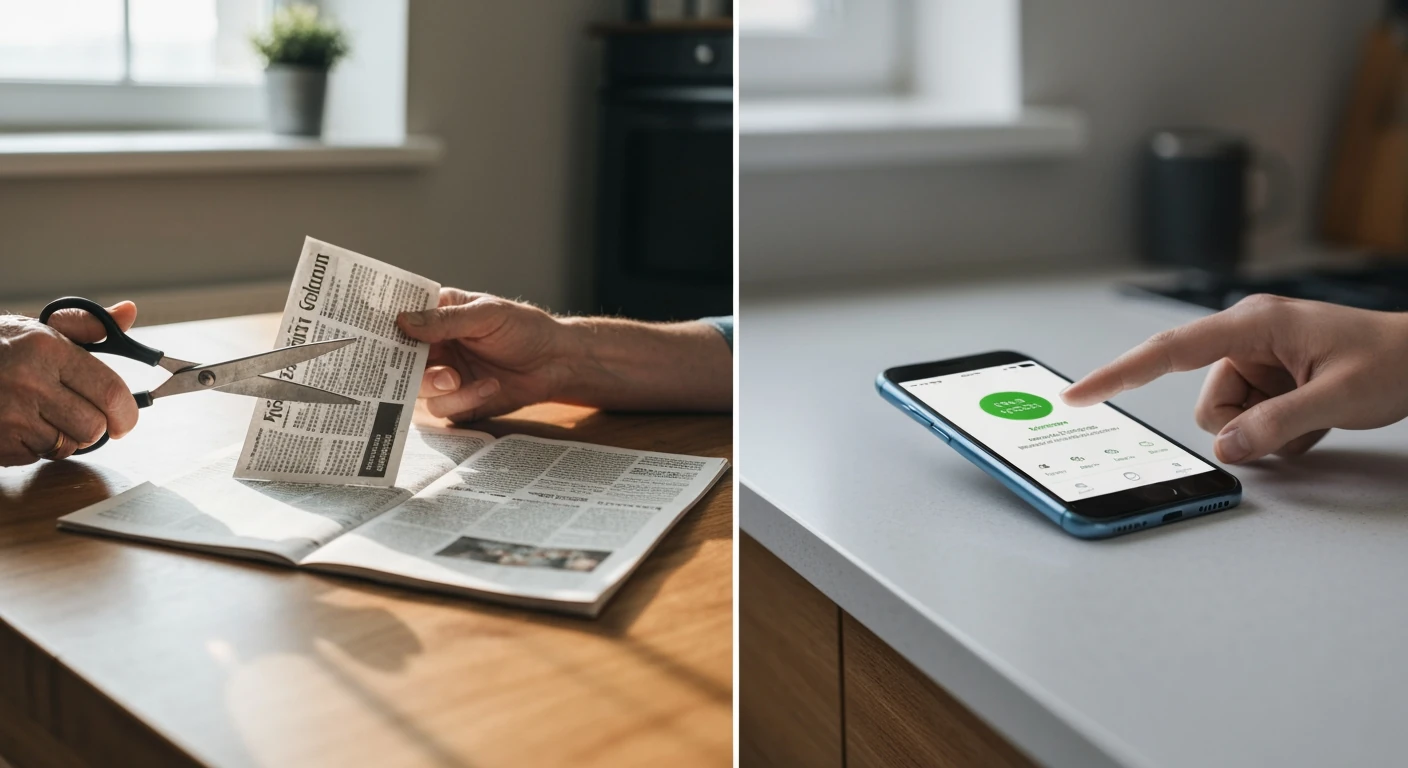
Unlike paper coupons you simply hand to a cashier, most digitais require prior action. Before your shopping trip, you need to log into your grocery store’s app or website and “clip” the offers you want to use. This action links the discount directly to your loyalty account, which is typically tied to your phone number or a physical card.
This process is simple. You just tap or click on the offers. A common mistake is assuming that just because an offer is visible in the app, it will automatically apply. A RetailMeNot survey found that nearly 42% of shoppers have forgotten to activate a digital offer before checkout, resulting in lost savings. Don’t let that be you.
Decoding Store Policies: Digital vs. Paper
Store policies are the rulebook for your savings game, and they can differ significantly from one retailer to another. A policy that works at Safeway might not apply at Target. Most digital manufacturer coupons are coded for a single use per loyalty account—a stark contrast to paper coupons where you could potentially use multiples in one trip (if you had them).
The underrated factor here is understanding the fine print on the digital offer itself. Does it apply to a specific size or flavor? Can it be combined with other deals? Some stores have embraced a more flexible approach, but others are quite rigid. The details for combining traditional coupons with digital savings are often buried in the FAQ section of a store’s website, so a quick check can prevent surprises at the register.
Strategic Stacking: Maximizing Your Savings
Stacking is the art of combining multiple discounts on a single item to achieve the lowest possible price. While it might sound complex, the basic principles are straightforward. With a little planning, you can turn a good deal into an incredible one. It requires a bit more effort than casual clipping, but the payoff is substantial.
The key is knowing which types of discounts can be paired together.
Combining Digital with Sales
The most accessible form of stacking is pairing a digital coupon with an existing in-store sale. This is the foundation of smart couponing. For example, a popular brand of pasta might be on sale for $1.50, down from its regular price of $2.79. If you previously clipped a $0.50 digital manufacturer’s coupon, your final price drops to just $1.00.
This strategy requires a bit of foresight. I find it’s best to review the weekly store flyer at the same time you’re clipping digital coupons. By aligning your shopping list with both sales and available coupons, you ensure every dollar is working harder. A well-thought-out plan is central to smooth grocery organization and maximum savings.
Manufacturer vs. Store Coupons
Here’s where the strategy gets more interesting. There are two main types of coupons: manufacturer coupons and store coupons. A manufacturer coupon is issued by the brand (e.g., Procter & Gamble, General Mills) and can be redeemed at any store that accepts them. A store coupon is issued by the retailer itself (e.g., a Target Circle offer or a Kroger weekly digital deal) and is only valid at that specific store.
The golden rule of stacking is that most stores allow you to use one manufacturer coupon and one store coupon on the same item. What you can almost never do is use two manufacturer coupons—for instance, a digital one and a paper one—on the same product. As consumer savings analyst Maria Flores often says, “The retailer is happy to combine their own discount with a manufacturer’s reimbursement because it creates an unbeatable price without costing them much extra.” It’s a powerful way to cut household costs effectively.
To ensure a smooth checkout, follow this simple checklist:
- Activate Early: Clip all potential coupons in your store app before you get to the store.
- Scan to Verify: Use the store’s app to scan an item’s barcode to confirm it matches the coupon’s requirements (size, variety, etc.).
- Prioritize Sale Items: Focus your coupon use on items that are already on sale to maximize your discount.
- Enter Your Loyalty Info: At checkout, always enter your phone number or scan your loyalty card first.
- Check Your Receipt: Before leaving the store, quickly review your receipt to ensure all your digital discounts were applied correctly. It’s much easier to fix an error on the spot than after you get home.
Verifying your receipt is a critical final step. Occasionally, a system glitch or a cashier error can cause a digital coupon to fail. Catching these discrepancies immediately saves you both money and a future headache.
Avoiding Common Pitfalls with Digital Savings
While digital coupons offer a fantastic way to cut costs, they come with their own unique set of traps. The simplicity of clicking to “clip” an offer can lead to overconfidence and simple mistakes that negate your savings entirely. Getting the most out of digital deals requires a bit more diligence than just tapping on your screen.
What most people miss is that convenience can sometimes work against you. It’s a different mindset. Unlike paper coupons you physically sort, digital offers can pile up unnoticed, leading to missed opportunities or, worse, poor spending decisions.
The Temptation of ‘Too Good to Be True’ Deals
One of the biggest dangers of digital couponing is the allure of an amazing deal on something you don’t actually need. Seeing 50% off a premium brand of ice cream is tempting, but if it wasn’t on your list, you haven’t saved money; you’ve just spent extra. This impulse is surprisingly common. Data from NielsenIQ suggests that nearly 68% of shoppers admit to making an unplanned purchase specifically because of a digital promotion they saw while browsing an app.
This temptation is the fast track to budget overspending. A cart full of bargains is only a win if those items were things you intended to buy anyway. Does your family really need three bottles of that fancy ketchup? Resisting these deals is a core discipline of effective household budgeting and falls outside of the foundational principles of smart money management.
Beyond overspending, you must also watch for outright scams. Be wary of offers that seem impossibly good, especially those from unfamiliar websites or social media ads. If a deal requires you to enter excessive personal information or download a strange file, it’s likely a phishing attempt. Legitimate store apps and manufacturer websites are your safest sources.
Tracking Expiration Dates Effectively
An expired coupon is just digital clutter. With paper coupons, the expiration date is printed in bold, a constant physical reminder. Digital offers, are often out of sight and out of mind until you’re at the checkout, only to find your expected discount has vanished.
Managing these deadlines is less like collecting stamps and more like juggling fresh produce; everything has a shelf life. Many store apps allow you to sort coupons by expiration date, which is an excellent feature to use before you shop. For a particularly high-value coupon, consider setting a calendar reminder on your phone a few days before it expires.
I suspect the most effective method is a weekly “coupon audit.” Before you even write your grocery list, spend ten minutes reviewing your clipped digital offers. This simple step ensures you build your shopping plan around savings you can actually use. A well-organized list, as detailed in our ultimate guide to grocery organization, is your best defense against expired offers. This proactive approach is a key part of combining traditional and digital savings successfully.
Ultimately, avoiding these common errors is what separates casual savers from those who consistently lower their household expenses. It transforms couponing from a game of chance into a reliable financial skill.
Integrating Digital Coupons into Your Family’s Budget
Viewing digital coupons as just a way to save a few dollars on a single shopping trip is a common mistake. The real power comes when you treat these savings as a consistent, integrated part of your family budgeting process. Thinking of it another way, ignoring these small discounts is like ignoring a slow drip from a kitchen faucet; one drop is nothing, but over a month, it creates a significant waste. This same principle applies to your finances.
These consistent small wins build powerful financial habits. Amelia Thorne, a financial planner specializing in family economics, explains, “The act of clipping a digital coupon is a micro-decision that reinforces a savings mindset. When a family sees their grocery bill decrease by 15-20% consistently, it’s not just about the money saved; it’s about building the discipline that carries over into larger financial choices.” What most people miss is that this discipline is the foundation for long-term wealth, not the occasional windfall.
Start by creating a “Digital Coupon Savings” line item in your monthly budget spreadsheet. At the end of each shopping trip, log the total amount saved from coupons into this category. It’s a simple but effective visualization of your efforts.
This transforms ephemeral discounts into a tangible asset. After a few months, that accumulated amount could be redirected to pay down debt, boost an emergency fund, or contribute to a family vacation. A study from the RetailMeNot Insights group found that dedicated coupon users can save over $1,150 per year. These digital discounts are just one of many unconventional money hacks that fortify your financial health.
Ultimately, integrating coupons is a core practice of modern home economics, turning the routine task of grocery shopping into a strategic financial activity. Combining this with a solid plan for smooth grocery organization ensures you are not just saving money on purchases, but also avoiding wasteful ones. The goal isn’t just about cutting household costs, but about reallocating those funds toward your family’s biggest goals.
The Future of Savings: Personalization vs. Privacy
Moving beyond simple digital clipping, the next frontier in family savings is already taking shape. As retailers gather more data on our shopping habits, expect coupons to become hyper-personalized, with AI-driven offers sent to you at the exact moment you need them. Imagine your grocery app not just offering a discount on your favorite yogurt, but doing so right as you’re about to run out, based on your typical purchase cycle.
This level of convenience presents a compelling trade-off. While the savings will be more targeted and effortless than ever, they will be powered by an exceptional amount of personal data. This raises a critical question for every savvy shopper: At what point do the savings we gain come at too high a cost to our privacy? As you master the tools available today, it’s worth considering where you’ll draw that line tomorrow.
Frequently Asked Questions About Digital Coupons
Are digital coupons generally better than printed coupons?
Digital coupons are better for convenience, personalization, and easy organization. printed coupons can sometimes be better for stacking with other offers, depending on store policy. The best strategy often involves using a combination of both.
Can I use digital coupons at any store?
No, most digital coupons are store-specific and must be used with that retailer’s loyalty program. While digital manufacturer coupons exist, they are still linked to and redeemed through a specific store’s app or website, unlike paper versions which are more universally accepted.
How do I know if a digital coupon has been applied?
The best way is to check your receipt before you leave the store. Each coupon discount should appear as a separate line item under the corresponding product. Some store apps may also send a notification or show a summary of savings after your transaction.
What’s the best way to organize my digital coupons?
Utilize the features within the store’s app, such as sorting by expiration date or product category. Make it a habit to do a quick weekly review of your clipped offers before you create your shopping list to ensure you’re planning around the deals you have available.
Do digital coupons expire faster than paper ones?
Not necessarily, but their expiration can feel more abrupt because they are not physically in your hand. The ‘out of sight, out of mind’ nature of digital offers makes it easier to forget them until it’s too late, so proactive management is key.