That feeling of sticker shock at the grocery checkout is all too common, but it’s not a result of bad luck or poor self-control. It’s the intended outcome of a carefully engineered environment. From the moment you grab a cart, you are being guided through a psychological maze designed with one primary goal: to maximize the store’s profit by encouraging you to spend more than you planned. Every sight, sound, and smell is a calculated part of this strategy.
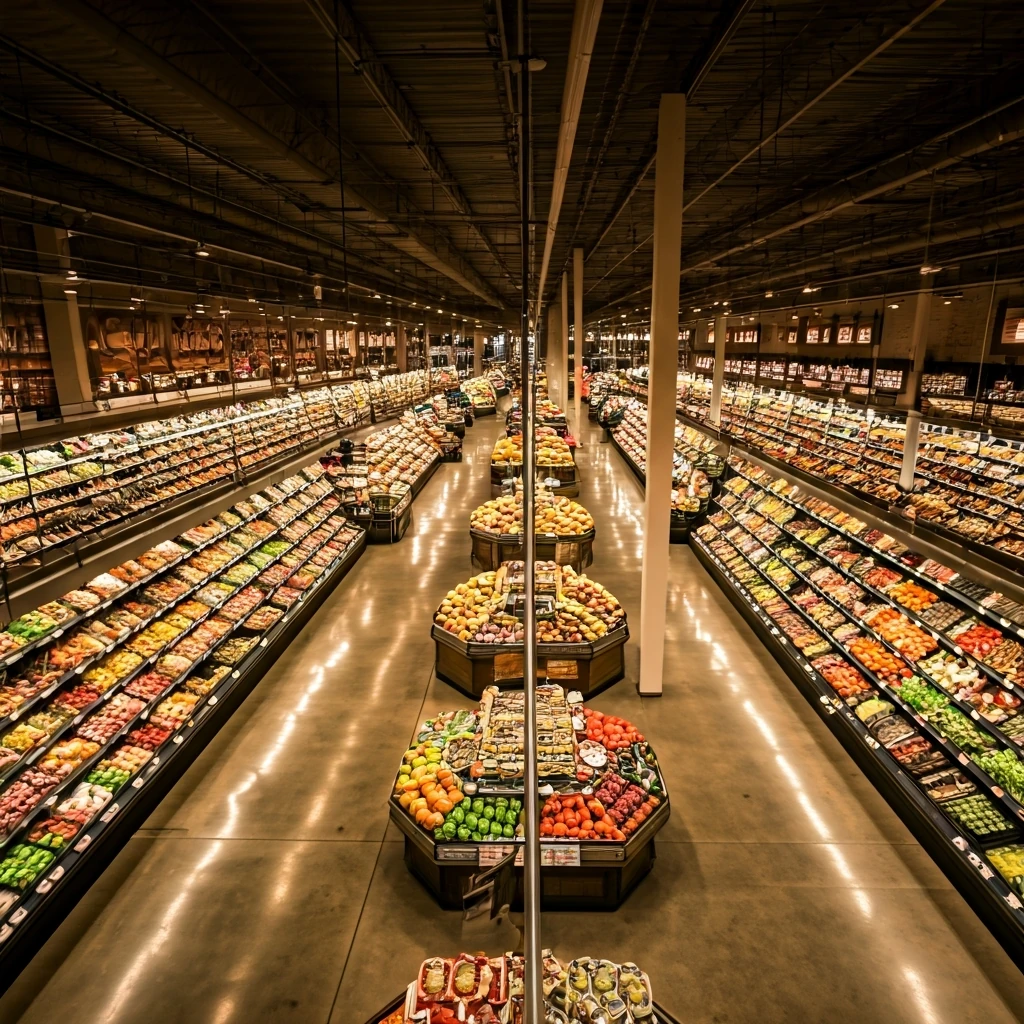
The modern supermarket layout is a masterclass in consumer psychology. Fresh, vibrant produce and the irresistible aroma of the bakery are placed at the entrance to elevate your mood and lower your financial inhibitions. Meanwhile, essential staples like milk, eggs, and bread are strategically located at the far corners of the store. This forces you to traverse the entire length of the market, passing thousands of tempting, high-margin products that weren’t on your list.
Resisting these sophisticated tactics requires more than just a shopping list; it demands a strategic blueprint. This guide will empower you by decoding the hidden language of the grocery store. We will dissect common layout strategies, provide a playbook of smart shopping techniques to counteract them, and show you how to build a personalized shopping map. By the end, you’ll no longer be a passive consumer but a savvy strategist, ready to navigate the aisles with confidence and significantly cut your grocery bill.
The Hidden Power of Grocery Store Layouts
Think your weekly grocery run is a series of random choices? Think again. Every turn you take, every item you see, is part of a master plan. The modern grocery store layout is not designed for your convenience; it’s a carefully crafted environment built to separate you from your money through sophisticated shopping psychology.
From the moment you walk in, you’re guided on a specific path. Fresh, colorful produce and the bakery are often placed at the entrance to create a sensory experience that puts you in a good mood and encourages impulse buys. Meanwhile, essentials like milk and eggs are almost always hidden in the back, forcing you to traverse the entire store and pass countless temptations along the way.
This deliberate design has a massive budget impact, adding unplanned items to your cart and inflating your bill. Resisting these tricks starts with recognizing them. When you understand the game, you can choose not to play, turning a manipulated path into your own strategic route to savings. This awareness, combined with a solid strategy like Meal Planning for Busy Families, becomes your best defense against overspending.
Decoding the Aisles: Common Store Layout Strategies
Ever wonder why you can never just run in for a gallon of milk? That’s not an accident; it’s a calculated design. Grocery stores are not organized for your convenience but for their profit, using proven psychological tactics to guide your path and inflate your spending. Every turn you take is part of a script written to separate you from your money.
The Fresh Perimeter: Where Quality Meets Impulse
Most stores funnel you into the produce section first, a vibrant and fragrant area that creates an impression of health and quality. This is the store zones strategy at its finest. By loading your cart with fresh fruits and vegetables, you feel virtuous, which psychologically lowers your guard against less-healthy impulse buys later on. This effect is why the bakery, with its irresistible smells, is often nearby.
The “fresh perimeter” also includes the meat, seafood, and dairy departments. Notice how essentials like milk and eggs are almost always located at the far back corner of the store. This forces you to walk the entire length of the market, passing thousands of other products, just to get the basics you came for. They are banking on you picking up a few extra items along your forced march.
The Center Aisles: Staples vs. Temptations
Welcome to the maze. The center aisles are the heart of processed foods, canned goods, and cleaning supplies, and where aisle organization becomes a weapon. Brands pay top dollar for premium product placement, which means the most expensive and profitable items are placed directly at adult eye level. Items marketed to children are conveniently placed at their eye level, encouraging pestering.
This is a battleground of temptation, where pantry staples are strategically separated to maximize your exposure to high-margin snacks and convenience foods. The goal is to make you hunt for the flour or rice, walking past countless end-caps and special displays. Arming yourself with skills like Understanding Unit Pricing is crucial here, allowing you to compare costs accurately and ignore the flashy marketing designed to distract you.
| Strategy | Key Action |
|---|---|
| Master the Perimeter | Shop the outer edges of the store first for fresh produce, meat, and dairy before venturing into the center aisles. |
| Navigate Aisles Wisely | Look at the top and bottom shelves for better value; avoid the expensive, brand-name items placed at eye level. |
| Stick to Your List | Create a list based on a weekly meal plan and treat it as a strict contract with yourself to avoid impulse buys. |
| Time Your Trip | Shop mid-week (Tues/Weds) to get first access to new sales and ask staff about markdown schedules for perishables. |
| Leverage Unit Pricing | Ignore the total price and compare the ‘price per ounce’ or ‘price per unit’ on shelf tags to find the true best value. |
| Create a Personal Map | Organize your shopping list by department to create an efficient route through the store, preventing backtracking and temptation. |
Your Smart Shopper Playbook: Navigating for Savings
Stop thinking of the grocery store as a place to just pick up food. It’s a carefully designed environment built to separate you from your money. Your success depends on having a playbook of smart shopping techniques that counteracts every psychological trick and marketing trap they throw at you.
The Power of a List (and Sticking to It)
Walking into a supermarket without a list is a declaration of financial surrender. That piece of paper, or note on your phone, is not a suggestion; it is your shield against the thousands of temptations engineered to drain your wallet. Every item you buy that wasn’t on your list is a failure to protect your grocery budget.
A powerful list doesn’t materialize out of thin air; it’s the direct result of thoughtful preparation at home. It should be rooted in a clear plan for your meals and household needs for the coming week. This is precisely why effective Meal Planning for Busy Families is one of the most impactful habits you can adopt, ensuring every purchase serves a specific purpose.
The true test of discipline is not in writing the list but in executing it flawlessly. You must learn to treat your list as an unbreakable contract with yourself. This means ignoring the tantalizing aroma from the bakery and walking right past the end-cap display of sodas, because if it’s not on the list, it doesn’t go in the cart.
Timing Your Visit: When Stores Offer the Best Deals
If your shopping trips are dictated purely by convenience, you are actively choosing to pay more. The exact day and time you enter the store can have a dramatic effect on your final receipt. Forget shopping during the chaotic weekend rush when shelves are picked over and deals are scarce.
The middle of the week is often the strategic sweet spot. Many stores launch their new weekly circulars on a Tuesday or Wednesday, meaning you get first access to fresh sales and fully stocked shelves. This is also when managers are most likely to begin marking down items that need to sell before the weekend, giving you a distinct advantage.
Furthermore, learn the unique rhythm of your primary grocery store. Ask an employee in the meat department when they typically mark down products nearing their sell-by date. Observe when the bakery puts day-old bread on clearance. Knowing these inside patterns transforms you from a passive consumer into a savvy operator.
Scanning for Value: Unit Prices and Clearance Sections
Retailers know your eyes gravitate toward the large, colorful price tag, and they exploit this tendency. They trick you into believing that a bigger box or a “family size” label automatically means better value. The real story is told in the fine print: the unit price.
This small number on the shelf tag, often displayed as price per ounce or price per 100-count, is your ultimate tool to avoid impulse buys and make informed decisions. It cuts through confusing packaging and misleading sales language, allowing you to compare the true cost of different brands and sizes. A deep dive into Understanding Unit Pricing is a fundamental skill for anyone serious about saving money.
Make it a habit to visit the clearance sections before you begin shopping from your list. These treasure troves are frequently located on end-caps near the back of the store or in a designated aisle. Scoring pantry staples, cleaning supplies, or personal care items at a 50% discount or more provides a massive boost to your budget before you even touch the main aisles.
Coupon Stacking: Maximizing Discounts In-Store
Using a single coupon is basic. The next level, where serious savings are unlocked, is coupon stacking. This is the practice of combining multiple discounts on a single item, a technique that can drastically reduce your out-of-pocket cost.
The most common form of stacking involves using a manufacturer’s coupon on an item that is already on sale at the store. An even more powerful stack occurs when a store’s policy allows you to also add a store-specific coupon to that same item. This creates a triple-threat of discounts that maximizes your savings.
For example, a bottle of shampoo is on sale for $4.00, down from $5.50. You have a $1.00 off store coupon and a $1.50 off manufacturer coupon. By stacking them, you pay just $1.50 for that bottle, a staggering discount off the original price. Mastering these combinations is a core part of learning Advanced Coupon Strategies.
Beyond the Shelves: External Influences on Your Grocery Bill
You blame the store layout for your bloated receipt, but the real budget culprit is often staring back at you in the mirror. The most sophisticated marketing tricks are no match for your own habits, which can either save you a fortune or drain your bank account. Your pre-shopping routine, brand allegiances, and in-aisle decisions have a far greater impact than any endcap display.
Taking control of these external factors is the first step toward true grocery savings. It requires shifting your mindset from a passive consumer to an active, strategic shopper. The power to cut your bill in half doesn’t lie in a secret aisle; it’s in the plan you make before you even leave your house.
The Art of Meal Planning for Efficiency
Stop wandering the aisles hoping for dinner inspiration to strike. A meticulously crafted meal plan is your single greatest weapon against the grocery store’s psychological warfare and your own impulsive tendencies. By knowing exactly what you need for the week’s meals, you create a surgical shopping list that leaves no room for costly, unplanned additions.
The benefits extend far beyond your wallet, saving you precious time and drastically reducing food waste. A plan transforms your shopping trip from a chaotic treasure hunt into a swift, efficient mission. For families struggling to get organized, a solid strategy is essential, and our guide to Meal Planning for Busy Families offers actionable steps to get you started immediately.
Leveraging Digital & Printed Coupons Effectively
You think clipping a coupon or two makes you a savvy shopper? That’s just the surface level of the savings game. True masters of the grocery budget understand that coupons are tools for a larger strategy, not just one-off discounts. The real savings come from strategically combining digital offers from coupon apps, store loyalty program discounts, and traditional paper coupons.
Most shoppers fall into the brand loyalty trap, an invisible cage that makes you overspend without a second thought. Are you buying that specific brand of cereal out of habit, or is it genuinely the best value? Questioning these automatic choices is critical to lowering your grocery spending habits and unlocking deeper discounts.
Use coupons as an excuse to try a competitor’s product or a store brand, which can often lead to significant savings. Combining a coupon with a sale on a less-familiar brand is a classic power move. This disciplined approach is a cornerstone of true Advanced Coupon Strategies and forces you to pay attention to the actual value you’re receiving, often by comparing unit pricing.
Mapping Your Savings: Personalizing Your Grocery Route
Stop wandering the aisles as if the store layout is a mystery. Every unplanned turn is a potential budget-breaker, a trap set by retailers to encourage impulse buys. It’s time to take control and create a personal grocery map that dictates your every move, saving you both time and money by transforming you into a surgical shopper.
Your strategy begins before you even enter the store. Organize your shopping list by department, mirroring the store’s layout. This is a core component of successful Meal Planning for Busy Families. Most stores place fresh produce, meats, and dairy along the perimeter, so plan to hit these sections first to build the foundation of your cart with essential items.
With the perimeter secured, you can then make targeted strikes into the center aisles for pantry staples. An efficient shopping route means you never backtrack or wander into a snack aisle “just to look.” Your list is your mission directive; stick to it without deviation to avoid the siren call of end-cap displays and cleverly placed junk food.
Finally, make the frozen food section and checkout your last stops. This mental map, executed with discipline, prevents items from thawing and, more importantly, stops you from second-guessing your choices. You are no longer a passive consumer but the architect of your own shopping experience, cutting costs with every deliberate step.
Common Grocery Traps and How to Sidestep Them
You walk into a grocery store thinking you’re in control, but are you? Every aisle, every shelf, and every promotion is a calculated move in a high-stakes game for your money. They have spent millions researching your psychology, but you can outsmart their most effective tricks by simply knowing what they are.
Recognizing these traps is the first step toward dismantling their power over your wallet. It’s time to stop being a pawn in their sales strategy and start playing your own game. Your budget depends on you seeing the store not as a place of convenience, but as a carefully constructed maze designed to make you overspend.
The ‘Eye-Level is Buy-Level’ Phenomenon
Stop and look at the shelves on your next trip. The products placed directly at your eye level are not there by accident; they are prime real estate. Stores charge brands a premium for this placement because they know your eyes—and your cart—will naturally gravitate toward them. These are often the most expensive, brand-name items, not the best value.
Your counter-move is simple yet revolutionary: look up and look down. The more affordable store brands and bulk items are often placed on the highest and lowest shelves. The store is betting on your laziness. Prove them wrong by doing a simple squat or stretch to grab a better deal, turning their deliberate design into your savings opportunity.
Resisting End-Cap Temptations
Those towering displays at the end of each aisle, known as end-caps, are psychological magnets. They scream “deal” and “special,” creating a sense of urgency that encourages you to grab and go without thinking. The truth is, these items are often no cheaper than they are in their regular aisle and are sometimes just overstock the store wants to move quickly.
Don’t let the flashy presentation fool you into making an impulse buy. If an end-cap display catches your eye, walk away and find the item’s regular home on the shelf to compare prices. This is where truly savvy shoppers apply their knowledge of Understanding Unit Pricing to determine if the so-called sale is a genuine bargain or just clever marketing.
Beware of the Bulk Buy Illusion
Bigger is not always better, especially when it comes to your grocery bill. Warehouse clubs and “family-size” packages promise huge savings, but they often lead to a different kind of financial drain: waste. Buying a gallon of mayonnaise or a case of avocados is only a good deal if you can actually use it all before it expires.
This trap preys on your desire for value, but it ignores the reality of consumption. Before you commit to a bulk purchase, be brutally honest about your household’s needs. Having a solid strategy for Meal Planning for Busy Families is your best defense, as it tells you exactly how much you need, preventing you from buying a five-pound bag of spinach that will wilt in your crisper.
Don’t Shop When Hungry: A Golden Rule
Shopping on an empty stomach is like walking into a negotiation unarmed and desperate—you are guaranteed to lose. Hunger is a primal trigger that short-circuits the logical part of your brain responsible for budgeting and planning. When your stomach rumbles, every snack, every prepared meal, and every sweet treat becomes irresistible.
You are handing the store’s marketing team an easy victory, turning your carefully curated list into a mere suggestion. The sights and smells of the bakery or the hot deli counter become impossible to resist. Always have a small snack before you go to the store; it’s the simplest yet most powerful way to keep your primal brain in check and your financial goals on track.
From Shopper to Strategist: Own Your Grocery Experience
You are now equipped with the knowledge to transform your grocery shopping from a costly chore into a strategic mission. Understanding that the store layout is a deliberate marketing tool is the first and most crucial step. By recognizing the ‘fresh perimeter’ lure, the ‘eye-level is buy-level’ trap, and the illusion of end-cap deals, you dismantle their power over your purchasing decisions.
The true path to savings, however, is paved with preparation. A well-crafted meal plan, an organized list, and the discipline to stick to it are your greatest assets. Combine this with the tactical use of unit pricing, clearance sections, and coupon stacking, and you create a powerful defense against impulse buys and inflated bills. Stop wandering the aisles and start executing your plan.
Ultimately, taking control of your grocery budget means shifting your mindset. You are no longer just a shopper; you are the architect of your own savings strategy. With every planned step and every conscious choice, you are outsmarting a system designed to make you overspend. Go forth and conquer the aisles.
Frequently Asked Questions
Why do grocery stores change their layouts so often?
Grocery stores frequently change their layouts to disrupt your shopping routine. This forces you to search for familiar items, leading you down new aisles and increasing your exposure to products you might not otherwise see. This ‘treasure hunt’ can trigger impulse purchases and helps the store promote new or high-margin items effectively.
What’s the best time of day to shop for deals?
The middle of the week, particularly Tuesday or Wednesday mornings, is often a strategic time to shop. Many stores launch their new weekly sales circulars then, ensuring shelves are fully stocked with fresh deals. Additionally, shopping early in the morning can help you find newly marked-down perishable items like meat, produce, and baked goods.
How can I use coupons most effectively with a market layout strategy?
To use coupons effectively, integrate them into your planning phase. Before you go to the store, match your digital and paper coupons to the items on your meal-plan-based shopping list. By organizing your list according to the store’s layout, you can move efficiently and use coupons only for planned purchases, avoiding the trap of buying something just because you have a coupon for it.