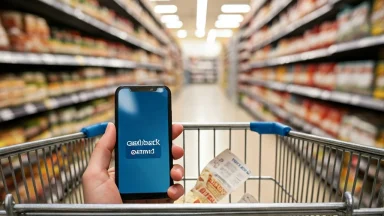
Watching your grocery bill climb higher each week can be frustrating, leaving you to wonder if there’s a better way to manage costs without sacrificing quality. You might clip a coupon here or there, but what if you could use multiple discounts on the same item for even deeper savings? This powerful technique, known as coupon stacking, is the secret weapon of savvy shoppers who consistently walk out of the store with a dramatically lower total. It’s a strategy that turns passive saving into an active, rewarding skill.
Coupon stacking is the art and science of combining different types of discounts on a single product to achieve the lowest possible price. This often involves pairing a coupon from the product’s manufacturer with a sale or coupon offered by the retail store itself. As technology has evolved, this practice has split into two major arenas: the traditional world of paper print coupons and the fast-paced convenience of digital offers loaded directly to your phone. Understanding the unique rules and opportunities within each of these formats is the first step toward unlocking their full potential.
This guide will serve as your ultimate resource for mastering both digital and print coupon stacking. We’ll break down exactly where to find the best coupons, how to organize them for maximum efficiency, and the critical rules you need to know—like the difference between a store and manufacturer coupon. Furthermore, we’ll pit digital and print strategies against each other in a head-to-head showdown, revealing how to make them work together to maximize your savings on every shopping trip. Get ready to transform your budget and take control of your checkout total.
Unlocking Savings: What is Coupon Stacking?
Have you ever wondered if you could use more than one coupon on a single item to maximize your savings? The great news is that you often can, and this powerful technique is called coupon stacking. It’s the practice of using multiple discounts—like a manufacturer’s coupon combined with a store’s weekly sale—on the same product to achieve the lowest possible price. This simple strategy can transform your regular shopping trips into major saving opportunities.
Think of coupon stacking as a savvy shopper’s secret weapon. It goes beyond just clipping a single coupon here and there; it involves a bit of planning and understanding store policies. By learning which discounts can be combined, you turn saving money into a proactive and rewarding skill. This approach is a cornerstone of smart shopping and can dramatically reduce your checkout total with just a little effort.
For any family managing a household budget, the benefits are immediate and substantial. While saving a dollar on a box of pasta might seem small, these savings add up quickly across your entire shopping cart. Mastering this technique is a key element of effective budgeting for groceries, freeing up money that can be used for other essential expenses or family goals. It empowers you to take control of your spending and get more value out of every dollar.
But as you get started, you’ll discover two main types of coupons: traditional print coupons and modern digital ones. Each comes with its own rules and opportunities for stacking. Understanding the differences between them is crucial for unlocking the most savings, which is exactly what we’ll explore next.
The Digital Advantage: Maximizing Savings with Online Coupons
Let’s talk about the game-changer in the world of savings: digital coupons. Instead of spending hours clipping paper, you can now access incredible deals right from your smartphone or computer. This convenience has made saving money more accessible than ever, allowing you to easily incorporate deal-hunting into your regular routine of Budgeting for Groceries: Smart Shopping Tips and weekly trips to the store.
Digital coupons are electronic discounts that you can “clip” and add to a store loyalty card or account. When you check out, these savings are often automatically applied, taking the guesswork out of the process. This shift to digital has opened up powerful new ways to stack savings, often combining store offers with manufacturer deals and even cashback rewards.
Where to Find Digital Coupons
Finding these online deals is surprisingly simple once you know where to look. Most major grocery and retail stores have their own apps and websites where they post weekly digital coupons. You simply log into your account, browse the available offers, and click to add them to your card before you shop.
Beyond individual stores, a wealth of resources is available to help you centralize your couponing efforts. These platforms gather deals from various sources, making it easy to plan your shopping list around the best offers. Your main sources will typically include:
- Store Apps and Websites: Think of the apps for stores like Kroger, Target (with its Circle offers), or Safeway. These are often the first place to check for store-specific sales and digital coupons that can be stacked.
- Manufacturer Websites: Brands like Procter & Gamble, General Mills, and Unilever frequently offer high-value coupons directly on their own websites. You can often print these or load them directly to a store card.
- Dedicated Coupon Apps: Services like Ibotta, Fetch Rewards, and the Coupons.com app specialize in offering digital manufacturer coupons and cashback rebates. These are essential tools for any serious digital coupon stacker.
- Email Newsletters: Subscribing to your favorite brands’ and stores’ email lists can give you access to exclusive discounts and early notifications about upcoming sales, helping you plan ahead.
Pros and Cons of Digital Stacking
The biggest pro of using digital coupons is sheer convenience. There’s no need for scissors or binders; all your mobile savings are organized on your phone, ready to be used at a moment’s notice. This makes it incredibly easy to combine a store’s digital coupon with a manufacturer’s one for the same item, achieving a “stack” without any paper fuss.
Furthermore, digital platforms are perfect for combining deals with other savings methods. You can easily stack a digital coupon with a sale price and then submit your receipt to one of the Best Cashback Apps for Everyday Purchases to get money back. These digital stacking pros create a triple-dip approach that maximizes your savings on every single purchase, turning a good deal into a great one.
However, the digital world isn’t without its drawbacks. Many digital coupons are “limit one” and can only be used a single time, unlike paper coupons where you might be able to use several in one transaction. They are also often tied to a specific store’s loyalty program, meaning you can’t use a Kroger digital coupon at Walmart, which limits flexibility.
You also become dependent on technology. If your phone battery dies, the store’s Wi-Fi is down, or a coupon app glitches, you could lose out on your planned savings at the register. Finally, using these apps means sharing your purchase data with companies, which is a privacy trade-off that each family needs to consider for themselves.
| Feature | Digital Coupons | Print Coupons |
|---|---|---|
| Convenience | High; clipped and stored on a smartphone, often applied automatically. | Low; requires clipping, organizing, and presenting at checkout. |
| Organization | Minimal; managed within store or third-party apps. | High effort; requires a physical system like a binder or file box. |
| Stacking Potential | Excellent for stacking with store sales and cashback apps. | Excellent for stacking with store sales and digital rebates. |
| Availability | Found in store apps, manufacturer sites, and coupon apps. | Found in newspapers, direct mail, in-store dispensers, and printable websites. |
| Key Limitation | Often limited to one-time use and tied to a specific store’s loyalty card. | Can be limited by store policies on printed coupons; risk of loss or damage. |
| Best For | Shoppers who value speed, convenience, and app-based rewards. | Shoppers who enjoy planning and want tangible control over their discounts. |
Timeless Tactics: Mastering Print Coupon Stacking
While digital coupons offer convenience, there’s a reason savvy shoppers still swear by physical coupons. They offer a tangible, reliable way to save money without worrying about dead batteries or spotty in-store Wi-Fi. Holding your savings in your hand provides a unique sense of control over your grocery bill, making them a powerful tool that isn’t going away anytime soon.
Top Sources for Print Coupons
Building a solid stash of print coupons starts with knowing where to look. While the Sunday paper is the classic source, your mailbox and even the grocery store itself are treasure troves of savings. Combining manufacturer coupons, which are issued by the brand, with store-specific deals is the foundation of successful stacking.
Keep your eyes peeled for these valuable paper slips from a variety of places. The key is to gather from multiple sources to maximize your chances of finding deals on the products your family actually uses. Some of the most reliable sources include:
- Newspaper Inserts: The Sunday paper often contains coupon booklets from sources like Save and SmartSource, filled with high-value manufacturer offers.
- Direct Mail: Check your mailbox for flyers and envelopes from local grocery stores and brands, which often contain exclusive coupons to entice you to shop.
- In-Store Dispensers: Look for “blinkie” machines next to products on the shelf, which dispense coupons for that specific item.
- Print-at-Home Websites: Many websites allow you to select and print legitimate manufacturer coupons right from your home computer.
- Catalina Coupons: These are the long, receipt-like coupons that print from a separate machine at checkout, often offering savings on a future purchase.
Effective Organization for Print Coupon Enthusiasts
Having a pile of coupons is one thing; having an organized system that makes them easy to use is another. A disorganized collection leads to expired coupons and missed deals at the register. The best approach is to align your coupon organization with your shopping habits, similar to how effective Meal Planning on a Budget: Weekly Strategies ensures you only buy what you need.
There is no single “right” way to organize, so find a method that fits your personal style. For some, a detailed binder is perfect, while others prefer a simpler approach for their weekly trips. Consider one of these popular methods to get started:
- The Binder Method: Use a multi-pocket binder with clear baseball card sleeves to sort coupons by category (e.g., dairy, frozen, cleaning supplies). This method is thorough and great for visual shoppers.
- The Accordion File Box: A small, portable file box allows you to sort coupons by aisle or expiration date, making it easy to grab and go.
- The Envelope System: For a minimalist approach, simply use labeled envelopes for each store you plan to visit, placing only the coupons you’ll use for that specific trip inside.
No matter which system you choose, the goal is to make the checkout process smooth and stress-free. A well-organized system is a cornerstone of any strategy for Budgeting for Groceries: Smart Shopping Tips. By having your coupons sorted and ready, you can confidently hand them to the cashier, ensuring you get every discount you’ve planned for.
To take your savings to the next level, remember that print coupons can often be used alongside digital rebates. After you’ve paid, you can scan your receipt into one of the Best Cashback Apps for Everyday Purchases to get even more money back. This powerful combination turns a good deal into a great one.

The Stack-Off: Digital vs. Print Coupon Combination Strategies
While using one type of coupon is great, the real power comes from making them work together. This is where you can achieve maximum discounts by strategically stacking different offers on a single item. Mastering this technique transforms your shopping trips and unlocks a new level of savings that goes far beyond clipping a single coupon.
The secret isn’t just about having a lot of coupons; it’s about understanding how they interact. Think of it as a puzzle where each piece—digital or print—has a specific place. When you learn the rules, you can solve the puzzle every time you check out, significantly lowering your grocery bill.
Understanding Coupon Types: Manufacturer vs. Store Coupons
Before you can stack, you must know what you’re holding. Nearly all coupons fall into two categories, and knowing the difference is the foundation of every successful stacking strategy. The most common type is the manufacturer coupon, which is issued by the company that makes the product, like General Mills or Procter & Gamble.
These coupons are designed to be used at any store that accepts them because the manufacturer reimburses the retailer for the discount. The second type is a store coupon, issued by the retailer itself, such as Target, Kroger, or CVS. Since the store absorbs the cost of this discount, these offers are only valid at that specific store or chain.
Key Rules for Successful Stacking
While every store has its own policy, a few universal coupon stacking rules generally apply. The most important rule is that you can typically combine one manufacturer coupon with one store coupon for the same item. This is the golden rule of stacking that savvy shoppers live by.
Here are the key principles to guide your efforts:
- One of Each: The most common successful stack involves one manufacturer coupon (either print or digital) and one store coupon (either print or digital) on a single product.
- No Doubling Down: You can almost never use two manufacturer coupons on the same item, regardless of whether one is digital and one is print. Store systems are designed to block this.
- Store Coupon Stacking: Some stores allow you to stack multiple store coupons, like an item-specific coupon with a total-purchase coupon (e.g., “$5 off your $30 purchase”). Always check your store’s policy, as this varies widely.
- Read the Fine Print: The coupon itself is your ultimate guide. It will state “Manufacturer Coupon” or “Store Coupon” at the top and specify any limitations, like one coupon per purchase.
Combining a Digital Manufacturer with a Print Store Coupon
This is a classic and easy way to see digital and print synergy in action. Imagine you’ve clipped a $1.00 digital manufacturer coupon for your favorite brand of coffee in your grocery store’s app. Then, you find a printed store coupon in the weekly mailer for “$2 off any coffee product.”
At checkout, you buy the coffee. The digital coupon you clipped applies automatically when you enter your loyalty number or have your app scanned. Then, you simply hand the cashier your printed store coupon to scan, and an additional $2.00 is deducted, giving you a total of $3.00 off.
Stacking Digital Store Offers with Print Manufacturer Coupons
Let’s flip the scenario, which is just as effective for combining coupons. Your favorite store’s app, like Target Circle, might have a digital store offer for 20% off all pasta. You also have a printed manufacturer coupon from the Sunday newspaper for $1.00 off any two boxes of Barilla pasta.
You would add the 20% digital offer in the app and purchase two boxes of Barilla pasta. The store’s 20% discount will apply first, lowering the price of both boxes. Then, you present your printed $1.00 coupon to the cashier for an additional reduction, making this a core tactic in successful Budgeting for Groceries: Smart Shopping Tips.
Common Stacking Pitfalls to Avoid
Even experienced couponers can run into trouble if they aren’t careful. One of the most frequent mistakes is trying to use two manufacturer coupons on one item, like a digital one you clipped and a paper one you cut out. The register’s software is built to catch this and will almost always reject the second coupon, causing delays at checkout.
Another pitfall is misreading the details. A coupon might be for a specific size or variety, and if you grab the wrong one, the coupon won’t scan. This also applies to expiration dates, which can be easy to miss on digital offers that expire without warning. Good organization is key, and it helps to align your couponing with your overall Meal Planning on a Budget: Weekly Strategies to ensure you only clip what you need.
Finally, be prepared for cashier confusion. Some employees may not be fully trained on the store’s official stacking policy. It’s helpful to have the policy saved as a screenshot on your phone or to politely ask for a manager if you believe a valid stack is being rejected. A calm and informed approach usually resolves any issues.
Beyond Coupons: Amplifying Your Savings Toolkit
Coupon stacking is a powerful technique, but it becomes even more effective when it’s part of a larger overall savings strategy. Think of coupons as just one tool in your money-saving toolbox. By combining them with other methods, you can significantly reduce your household expenses and make your budget stretch further. A solid approach to Budgeting for Groceries: Smart Shopping Tips often involves layering multiple savings tactics for maximum impact.
One of the easiest additions to your routine is using cashback programs. After applying all your coupons at the register, you can submit your receipt to a cashback app to earn money back on qualifying purchases. Similarly, always scan your store’s loyalty rewards card or enter your phone number at checkout. These programs often provide exclusive discounts, points toward future savings, and personalized offers that can be stacked with your coupons.
Beyond store-specific programs, a variety of third-party savings apps can help you find extra deals or track price drops. Integrating these digital tools with your couponing efforts creates a comprehensive system that consistently lowers your bills. When you combine this financial planning with practical household management, like Meal Planning on a Budget: Weekly Strategies, you truly master the art of saving money on everyday necessities.
The Final Verdict: Building Your Personal Savings Strategy
In the showdown between digital and print coupons, there is no single winner—the true champion is the savvy shopper who learns to use both. While digital coupons offer unparalleled convenience and automatic application, print coupons provide tangible control and can sometimes offer higher values or fewer restrictions. Relying on only one method means leaving potential savings on the table. The most effective approach is a hybrid one, where you leverage the strengths of each format to create a comprehensive savings plan.
Start by integrating digital apps into your routine for ease and cashback opportunities, but don’t neglect the value of Sunday inserts and printable coupons for those high-value manufacturer deals. By understanding the fundamental rule—one store coupon plus one manufacturer coupon per item—you can confidently combine offers from both worlds. The ultimate goal is to build a personalized system that fits your lifestyle, reduces your grocery bill, and empowers you to get the most value for every dollar you spend.
Frequently Asked Questions
Can you stack multiple manufacturer coupons on one item?
No, you generally cannot stack multiple manufacturer coupons on a single item. Retail systems are designed to accept only one manufacturer coupon per product, regardless of whether one is digital and the other is a physical printout. The common stacking method involves one manufacturer coupon and one store coupon.
What’s the difference between a store coupon and a manufacturer coupon?
A manufacturer coupon is issued and funded by the company that makes the product (e.g., Kraft, General Mills) and can be used at any retailer that accepts coupons. A store coupon is issued and funded by the retailer itself (e.g., Target, Kroger) and is only valid for use at that specific store or chain.
Are there apps that help with digital coupon stacking?
Yes, many apps are essential for digital stacking. Store-specific apps like Target Circle or the Kroger app provide digital store and manufacturer coupons. Additionally, third-party rebate apps like Ibotta and Fetch Rewards allow you to earn cashback after your purchase, adding another layer of savings.
How do I know if a store allows coupon stacking?
The most reliable way to know a store’s policy is to read it on their official website. Most major retailers post their coupon policy online, clearly outlining the rules for stacking. Generally, the standard practice is allowing one manufacturer coupon and one store coupon per item.
Is coupon stacking worth the effort for everyday shopping?
For most households, yes, coupon stacking is well worth the effort. While it requires some planning and organization, the savings can significantly reduce your weekly grocery bill. The cumulative effect of saving on multiple items during each shopping trip adds up to substantial budget relief over time.